REGULATED SERVICE
Designing a national self-exclusion service for problem gamblers
INTRO
GAMSTOP was created as a national self-exclusion service for problem gamblers, replacing a fragmented process where people had to exclude themselves from each operator separately. I worked on the consumer-facing service, helping design registration, support and identity verification for a high-trust product dealing with vulnerable users and sensitive personal data.
ROLE: Lead UX Designer
DATE: October 2017 – June 2018
OVERVIEW
The service needed to do more than sign users up. It had to help vulnerable people complete self-exclusion clearly and confidently, prevent misuse, and give users access to practical support at the right moment.
The wider product covered three main areas: an operator portal, the public registration and support service, and an admin portal used to manage the register. My work focused on the public-facing experience.
WHAT I WORKED ON
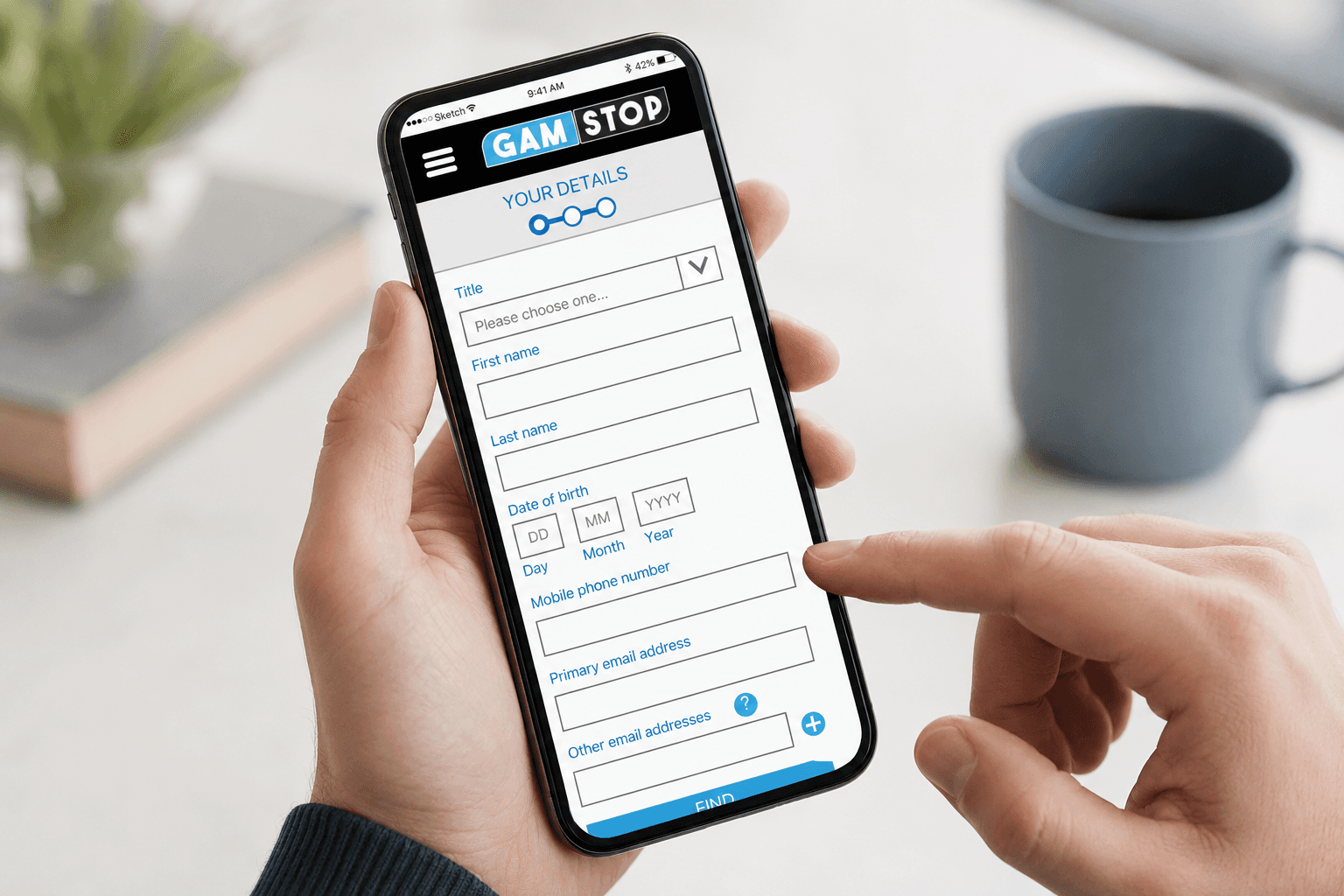
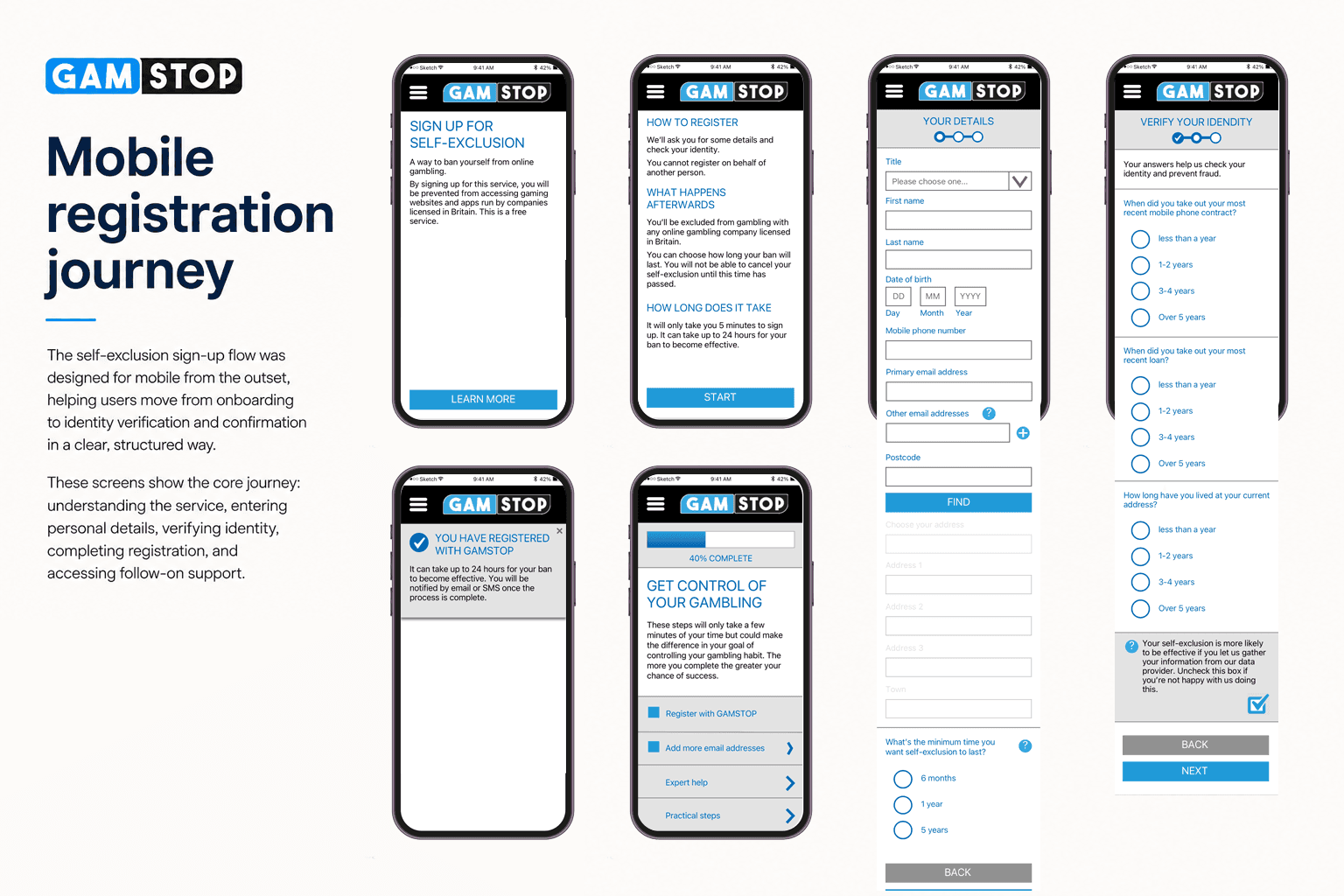
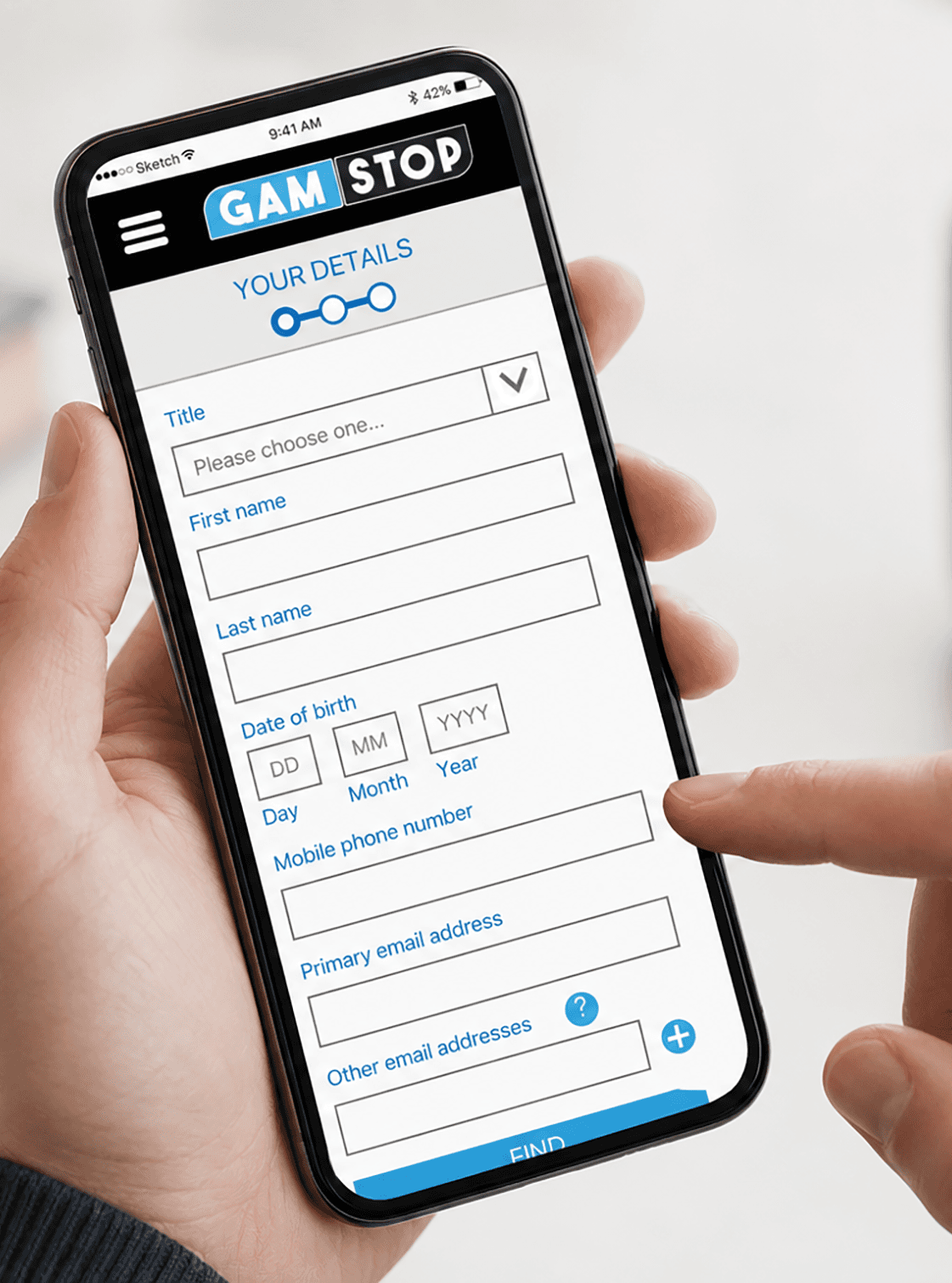
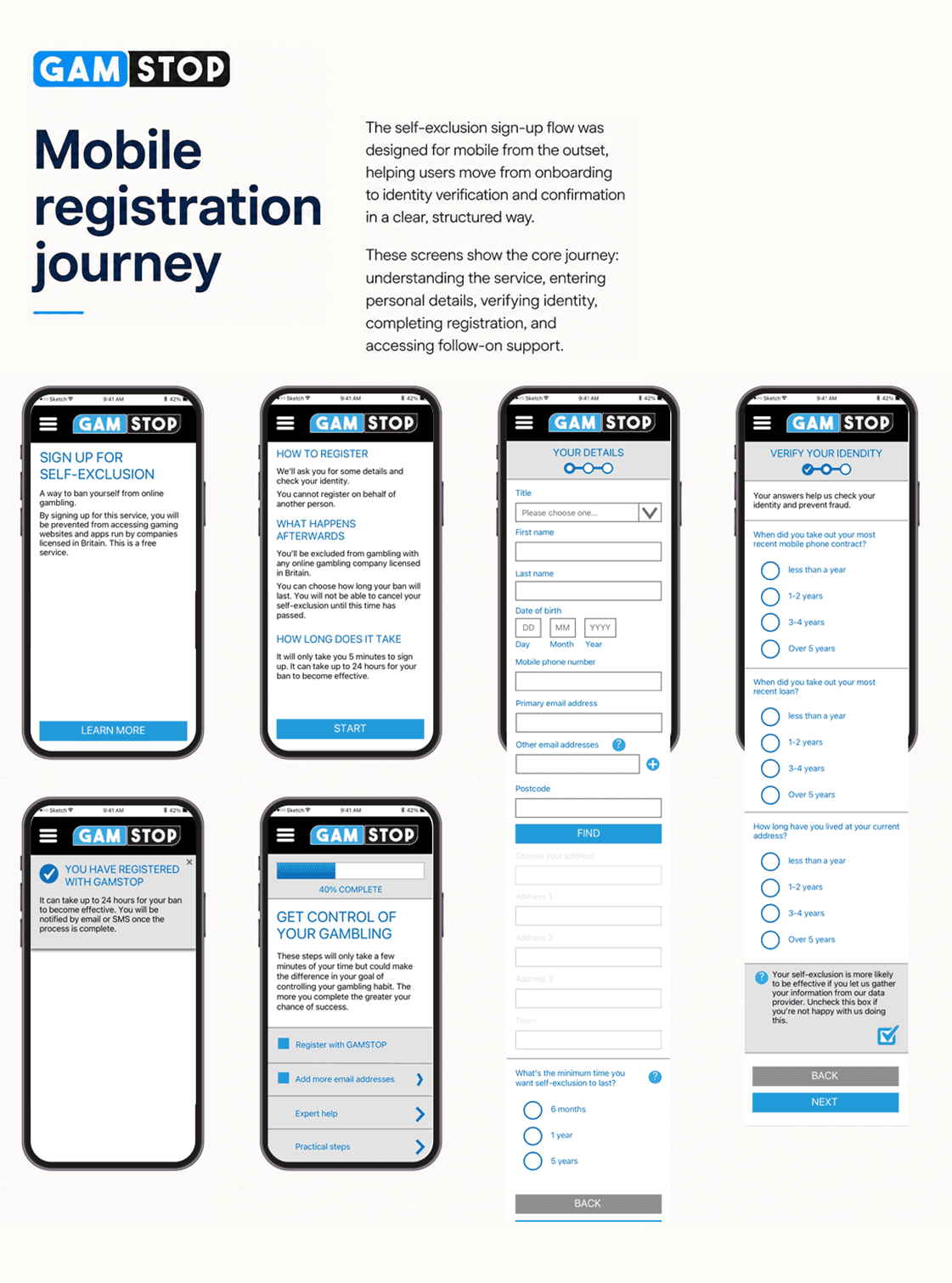
Designed the registration journey end to end
Created a style guide to standardise future screen outputs
Contributed to user research to better understand the needs of problem gamblers
Used those insights to shape practical support steps within the journey
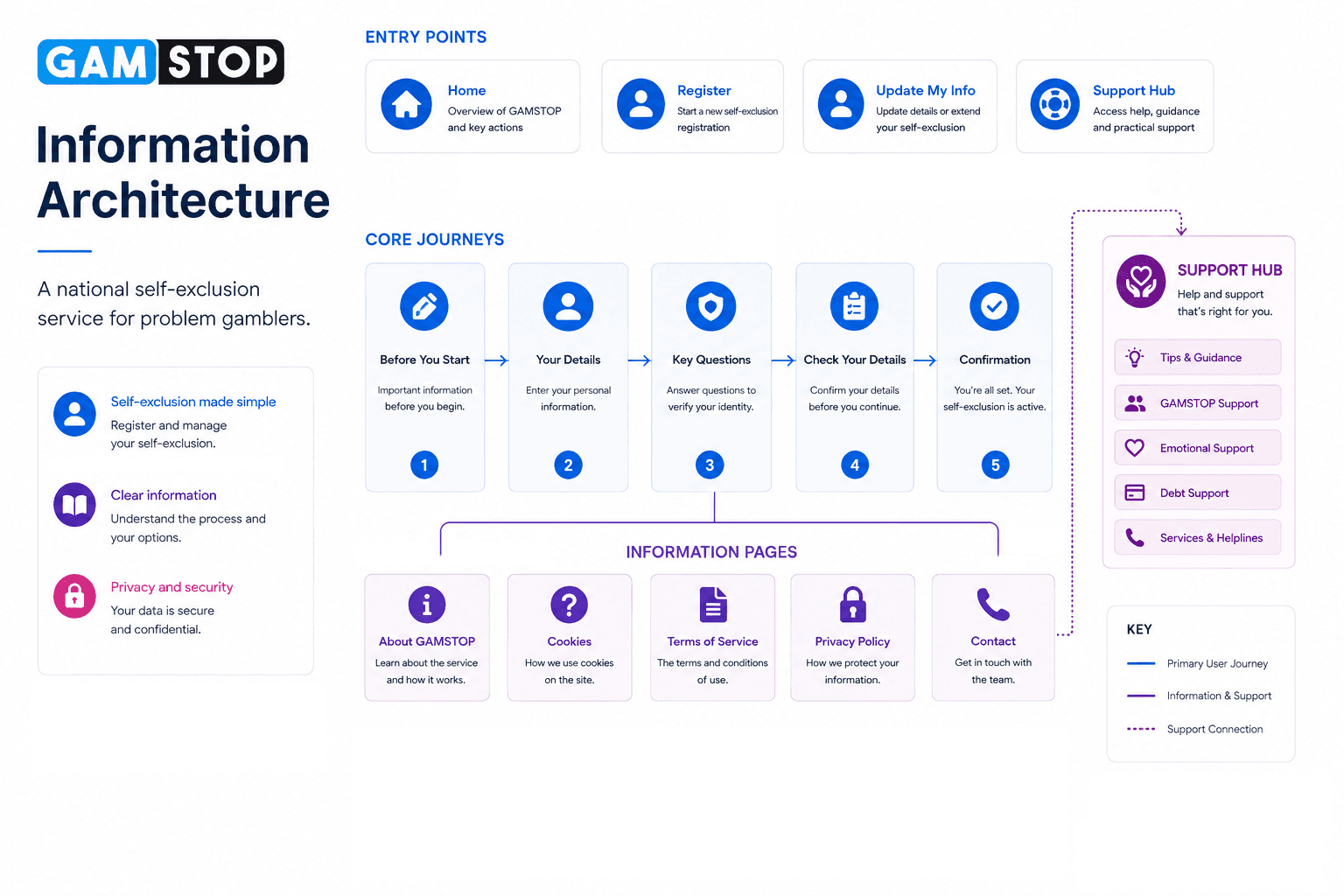
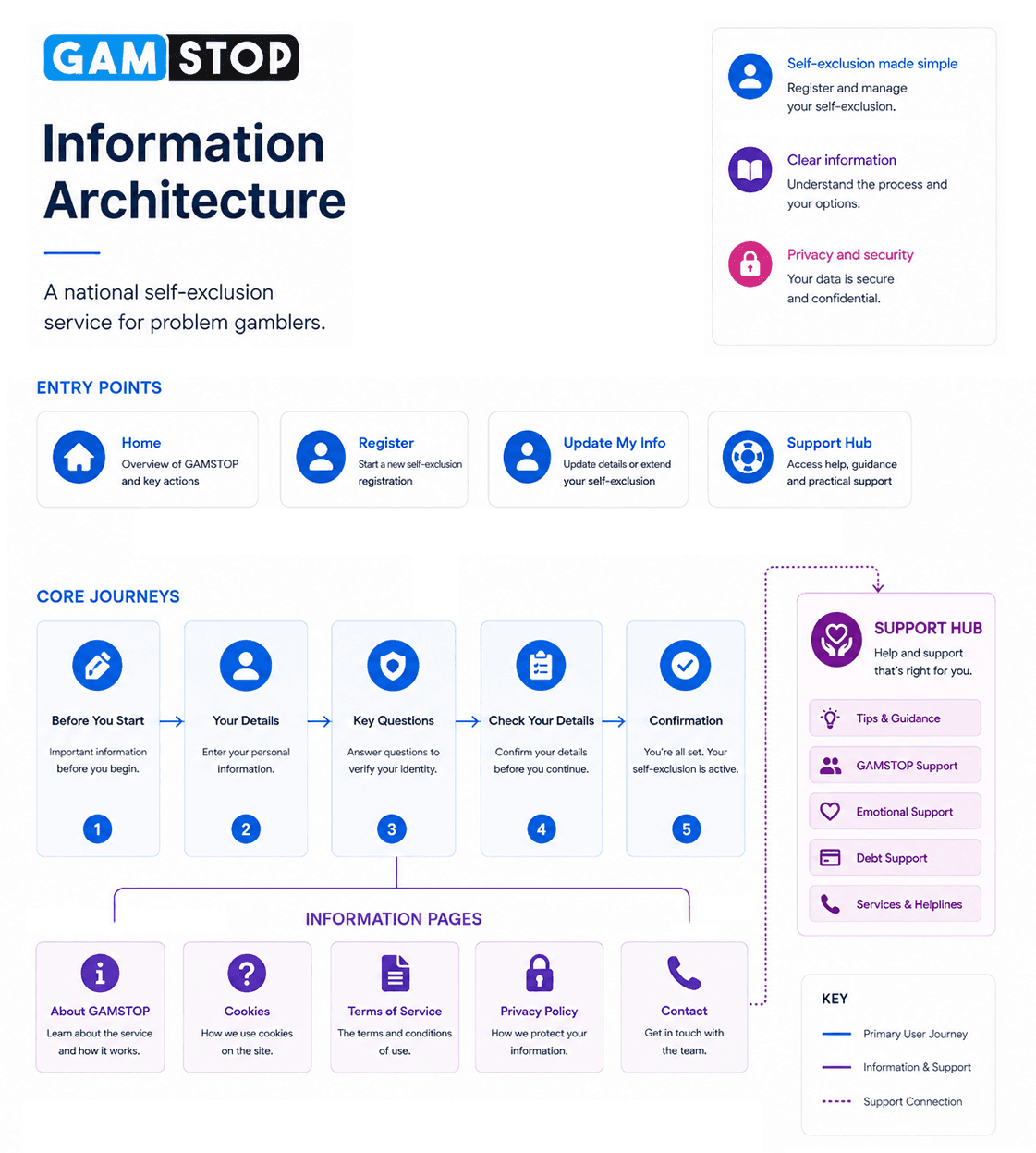
Designed a support hub for guidance and next steps
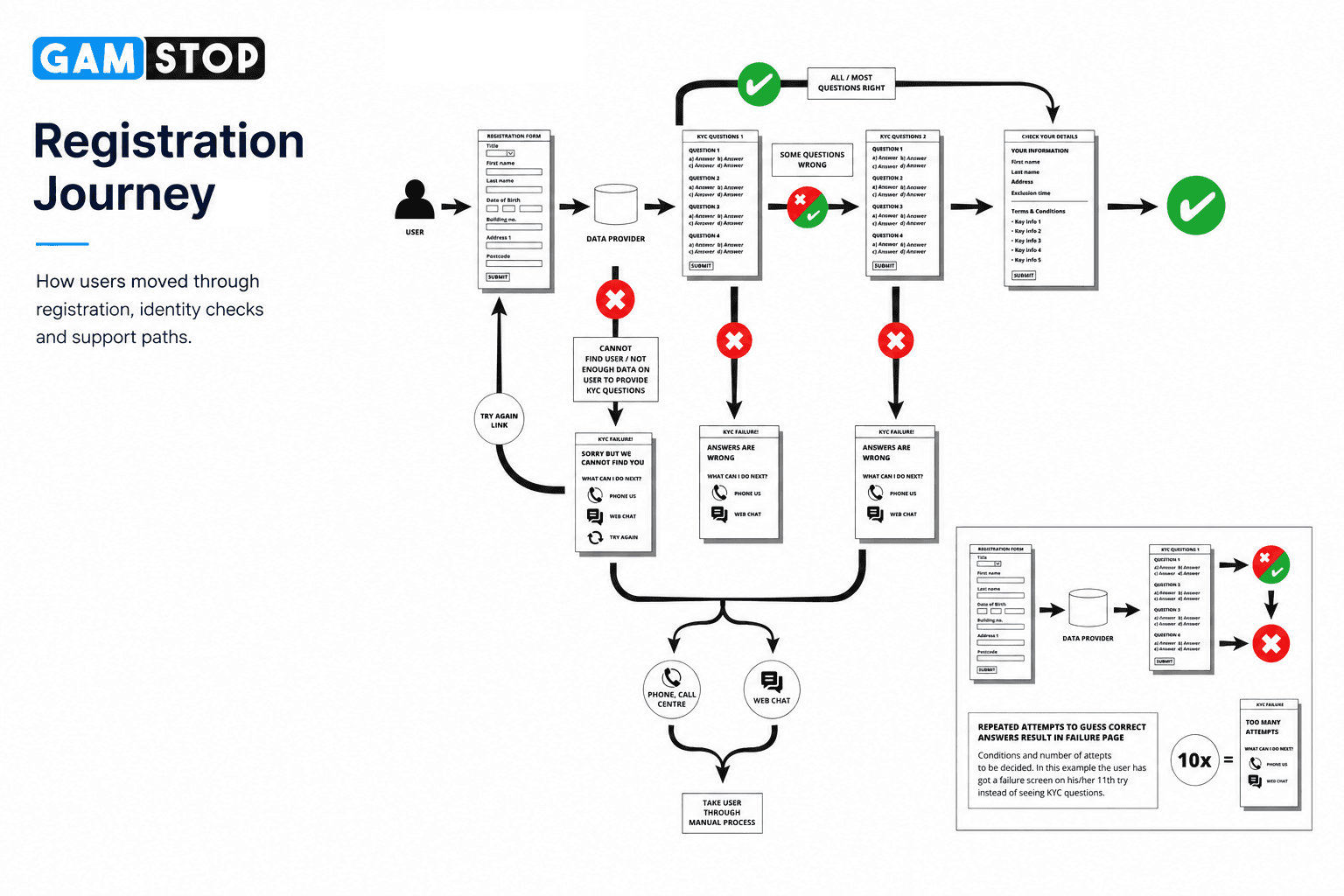
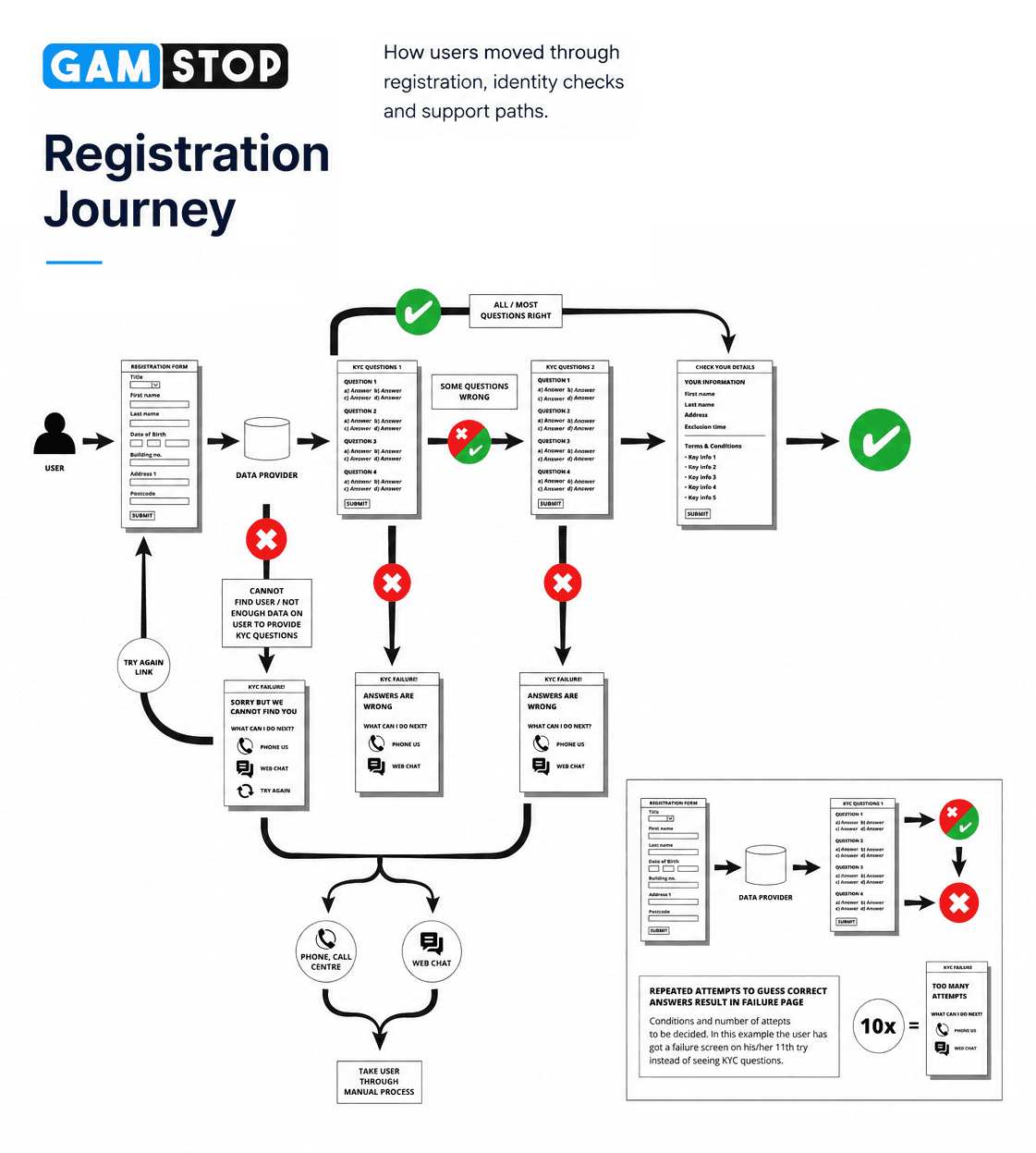
Worked on KYC and identity verification
Helped shape weighted knowledge-based verification questions
Created prototypes and tested them with users
THE CHALLENGE
This was a sensitive service for vulnerable users, so the experience had to balance clarity, support and security. The journey needed to feel simple enough to complete, while still protecting the service against false or malicious registration.
That made identity verification a core UX problem, not just a technical one. The design also had to support users who might return later to manage their exclusion, update details or access help again.
APPROACH
I treated registration, support and verification as one connected experience rather than separate features. Research helped uncover what users were going through, where they needed more reassurance, and what extra help would make the service more useful in practice.
Those insights shaped the registration flow, the support hub, and features such as adding extra email addresses linked to other gambling accounts. Prototypes were then used to test whether the experience felt understandable, trustworthy and usable. This reflects the stronger portfolio pattern of setting context early and showing how research and testing informed the design.
WHY IT MATTERS
This service sat at the intersection of safeguarding, trust and digital delivery. Good UX here was about more than smoother flows. It meant helping people take a difficult step, making support easier to access, and introducing the right safeguards without overwhelming users.
OUTCOME
The result was a more joined-up public service covering registration, support and secure access. The work helped create a more consistent design language, strengthen the KYC journey through prototyping and user testing, and expand the service beyond basic sign-up by giving users clearer support and more practical ways to manage self-exclusion over time.