Designing a retraining service to help people move into more secure work
ROLE: Lead UX Designer
DATE: May 2019 – March 2020
SUMMARY
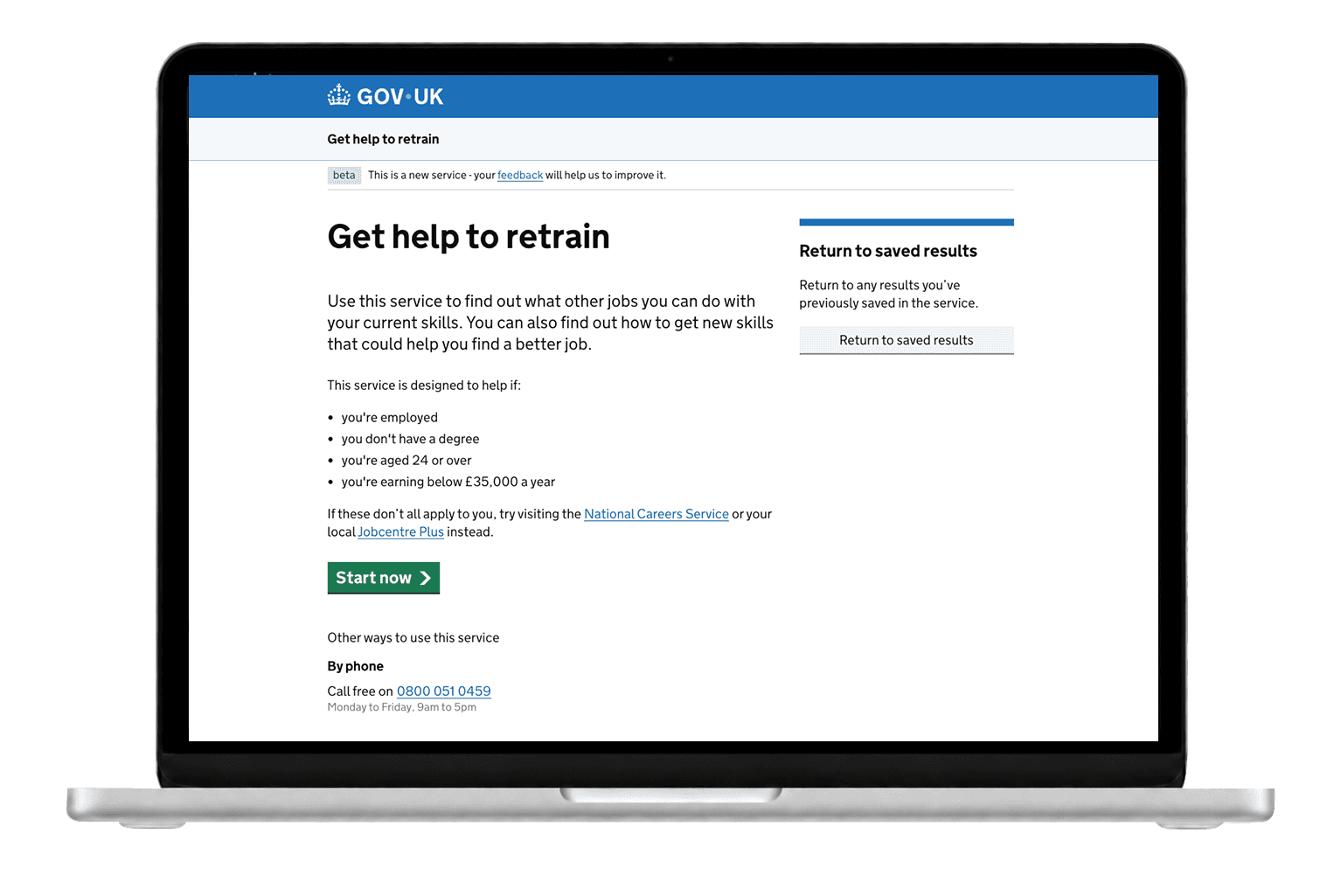
I worked on Get Help to Retrain, part of the Department for Education’s national retraining scheme. The service was designed to help people recognise the skills they already had, explore related roles based on transferable skills, and take practical steps towards more secure work in a changing labour market.
This was a citizen-facing government service with a demanding delivery context. The team needed to stand up a useful Alpha quickly, while working within the constraints of reused data sources, designing for a lower digital literacy cohort, and paying close attention to GOV.UK service standards ahead of GDS assessment.
WHAT I DID
Designed the service as part of DfE’s Get Help to Retrain programme.
Helped shape a service to support job seekers in building on existing skills and moving into more secure work.
Delivered a usable Alpha service within a tight 4-week timeframe.
Worked through the challenge of reusing existing data sources.
Designed patterns and information architecture for a lower digital literacy cohort.
Produced complex prototypes using the GDS prototyping toolkit.
Rigorously tested prototypes and iterated the service based on feedback and learning.
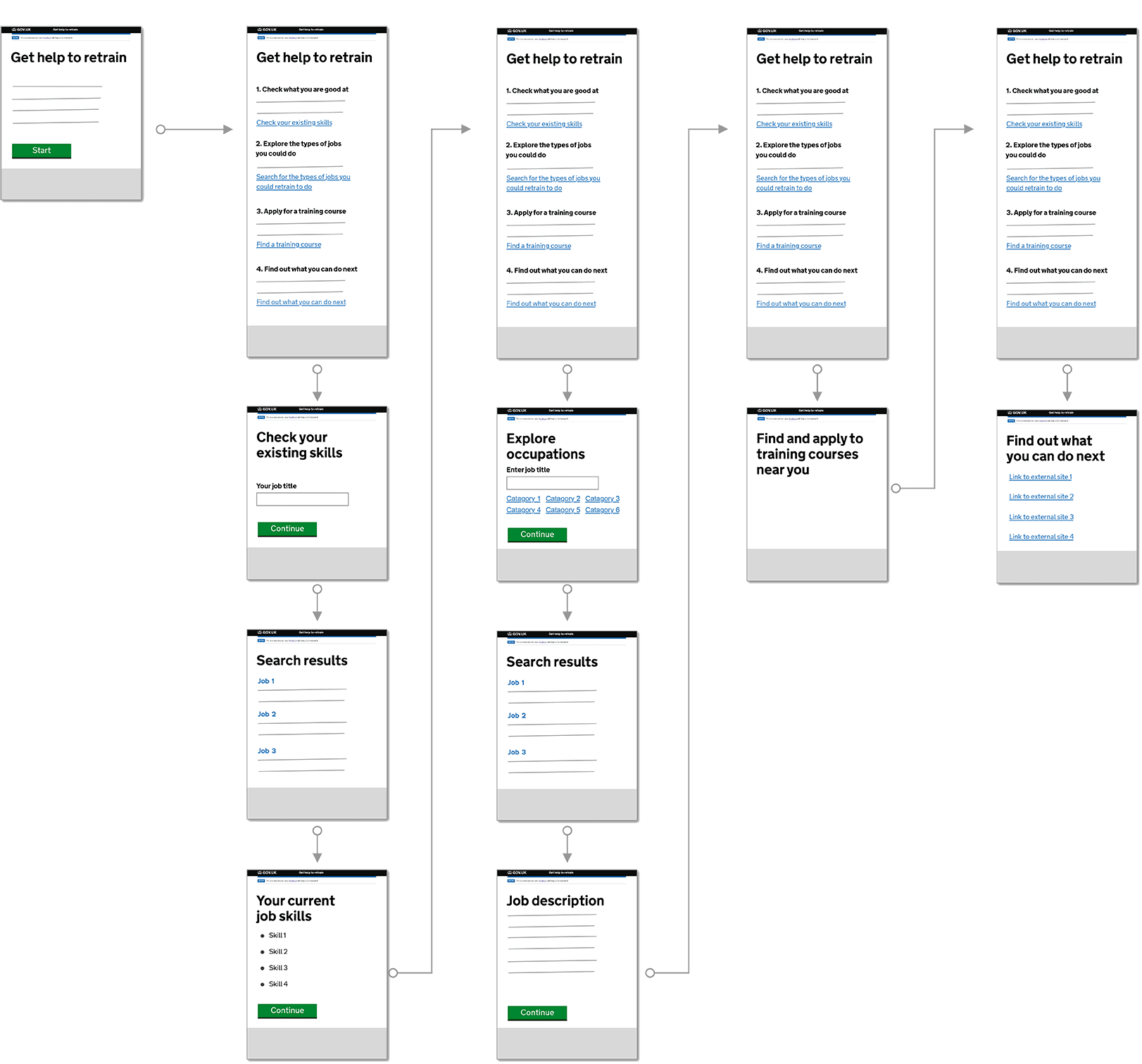
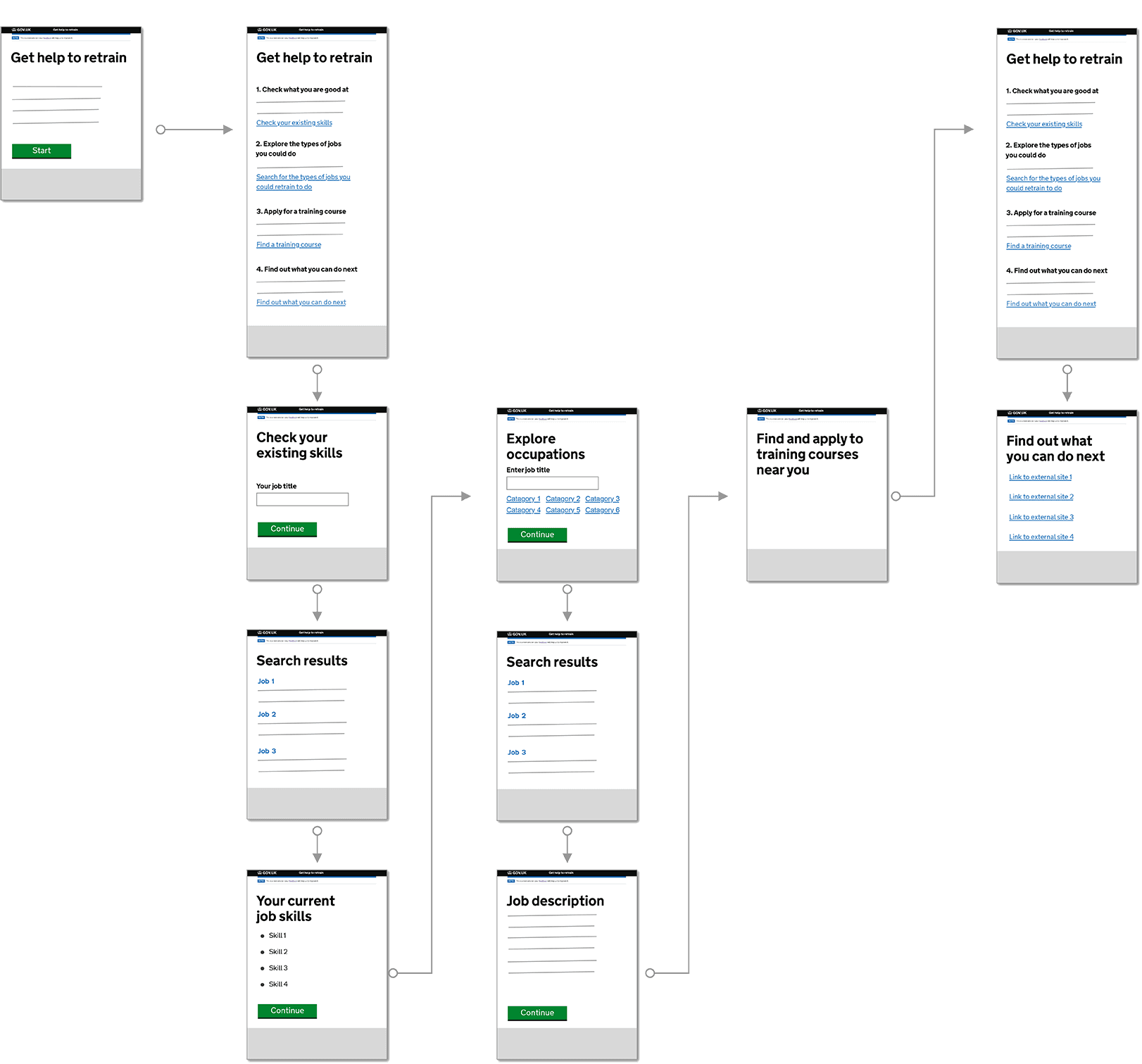
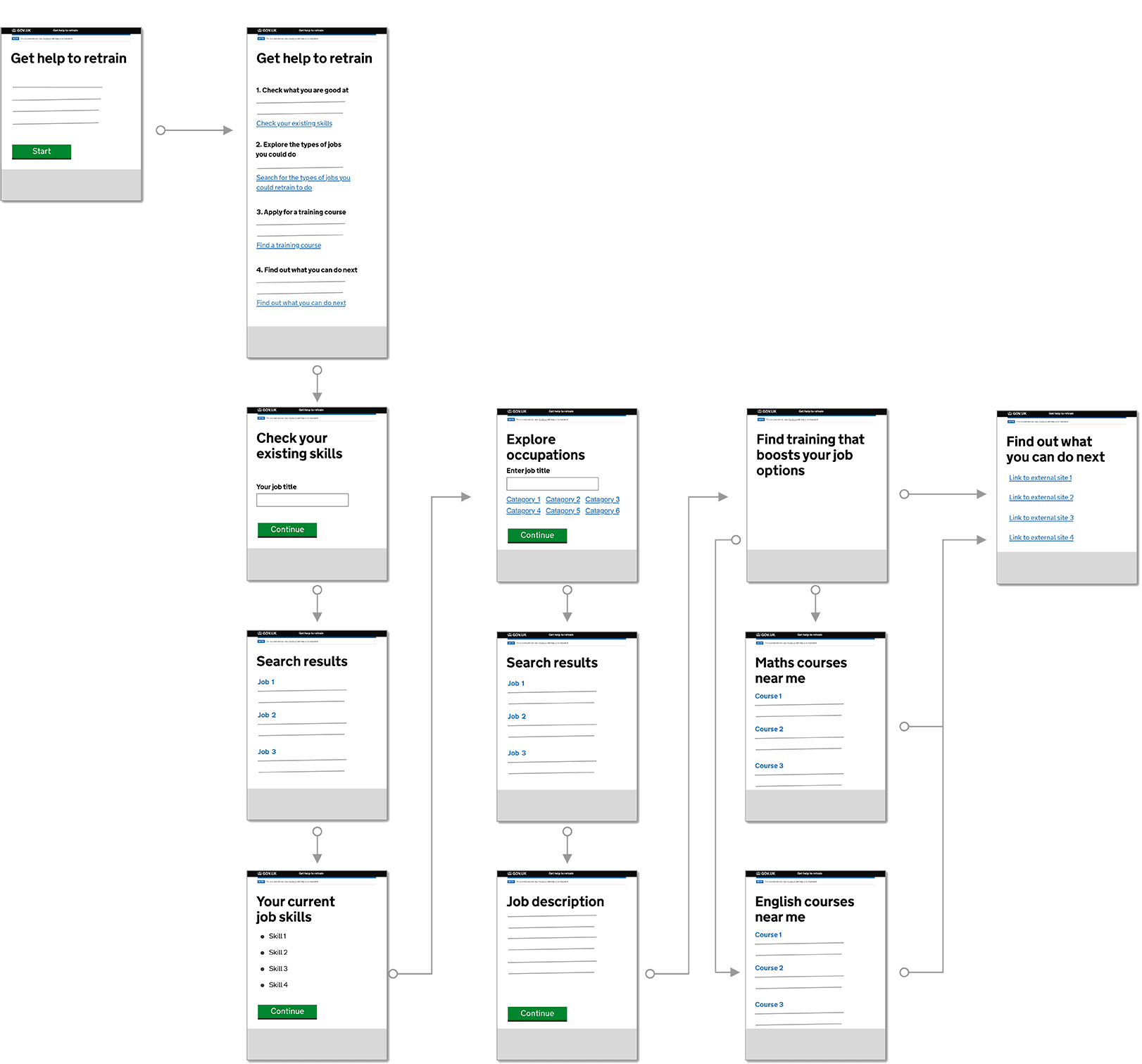
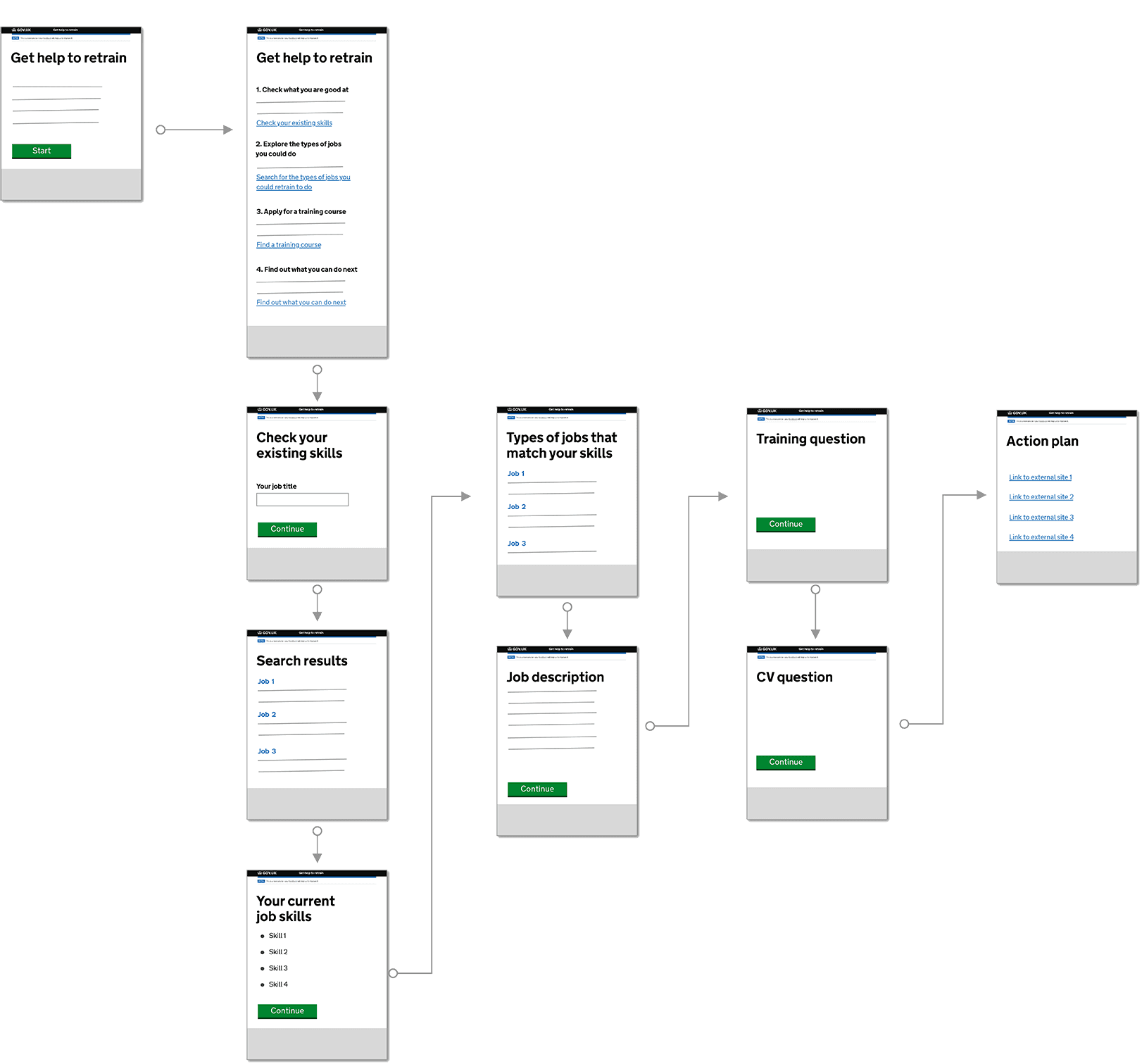
Designed the phased rollout of the service, producing both future-state prototypes for testing and phase-specific prototypes that gave developers a clear specification to build against.
Used prototype code to help communicate logic, styles and component behaviour to developers.
Paid close attention to GOV.UK service standards to help the service meet the level required for GDS assessment.
Took the project through GDS assessment.
THE CHALLENGE
The challenge was to design a service that was genuinely useful under Alpha timelines, without assuming high digital confidence from users. The audience needed clarity, familiar patterns and simple decision-making, while the service itself had to work within the limits of existing data and delivery constraints.
There was also a wider strategic challenge. The service needed to prove enough value to move forward, while still aligning with the expectations of a citizen-facing GOV.UK service. That meant balancing user needs, policy intent, feasibility and service-standard thinking throughout the design process.
APPROACH
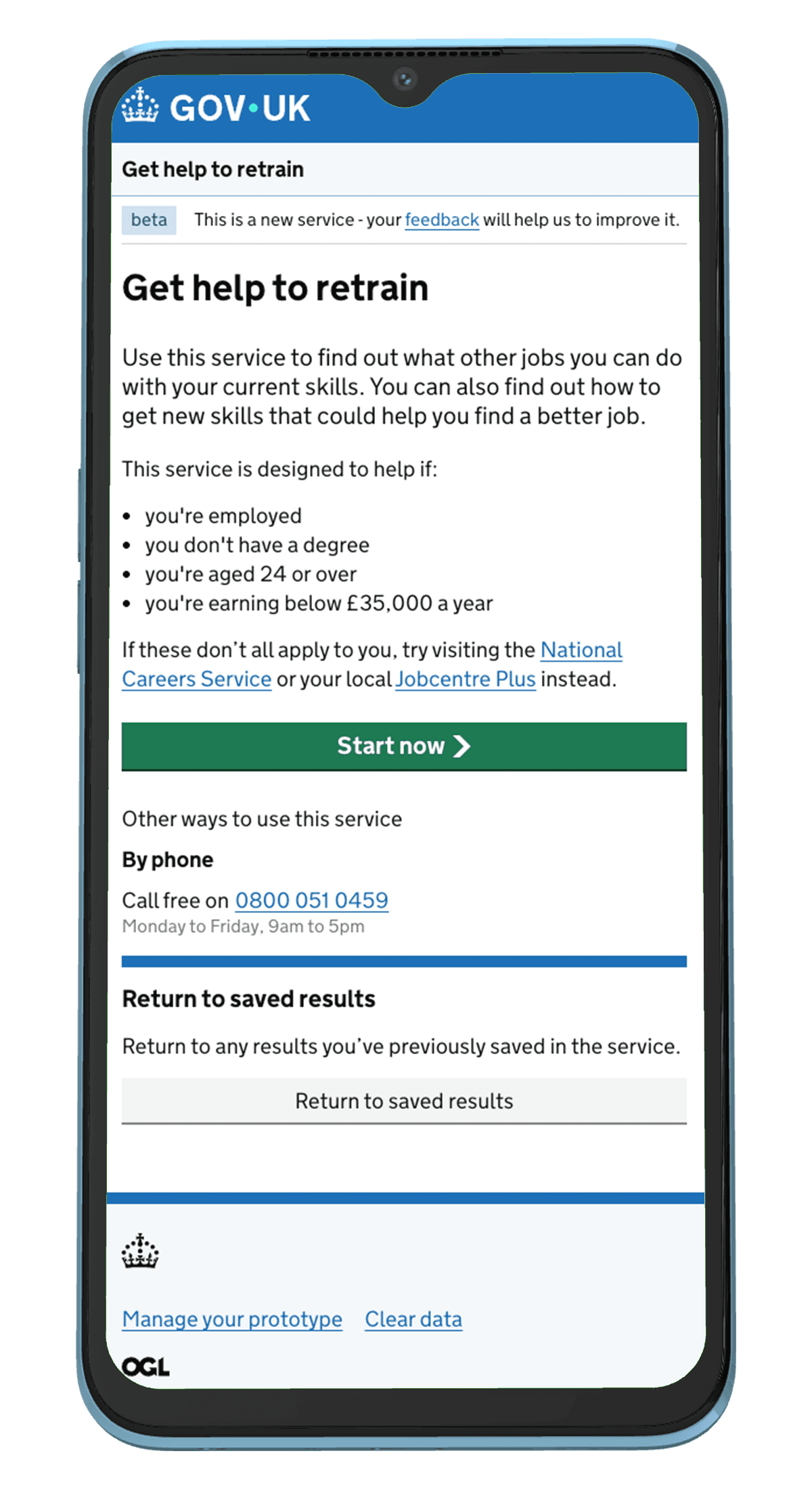
I focused on getting the service into a form that was understandable and usable early. That meant using the GDS prototyping toolkit to move quickly, while paying close attention to information architecture, task flow, content structure and the order in which information was introduced.
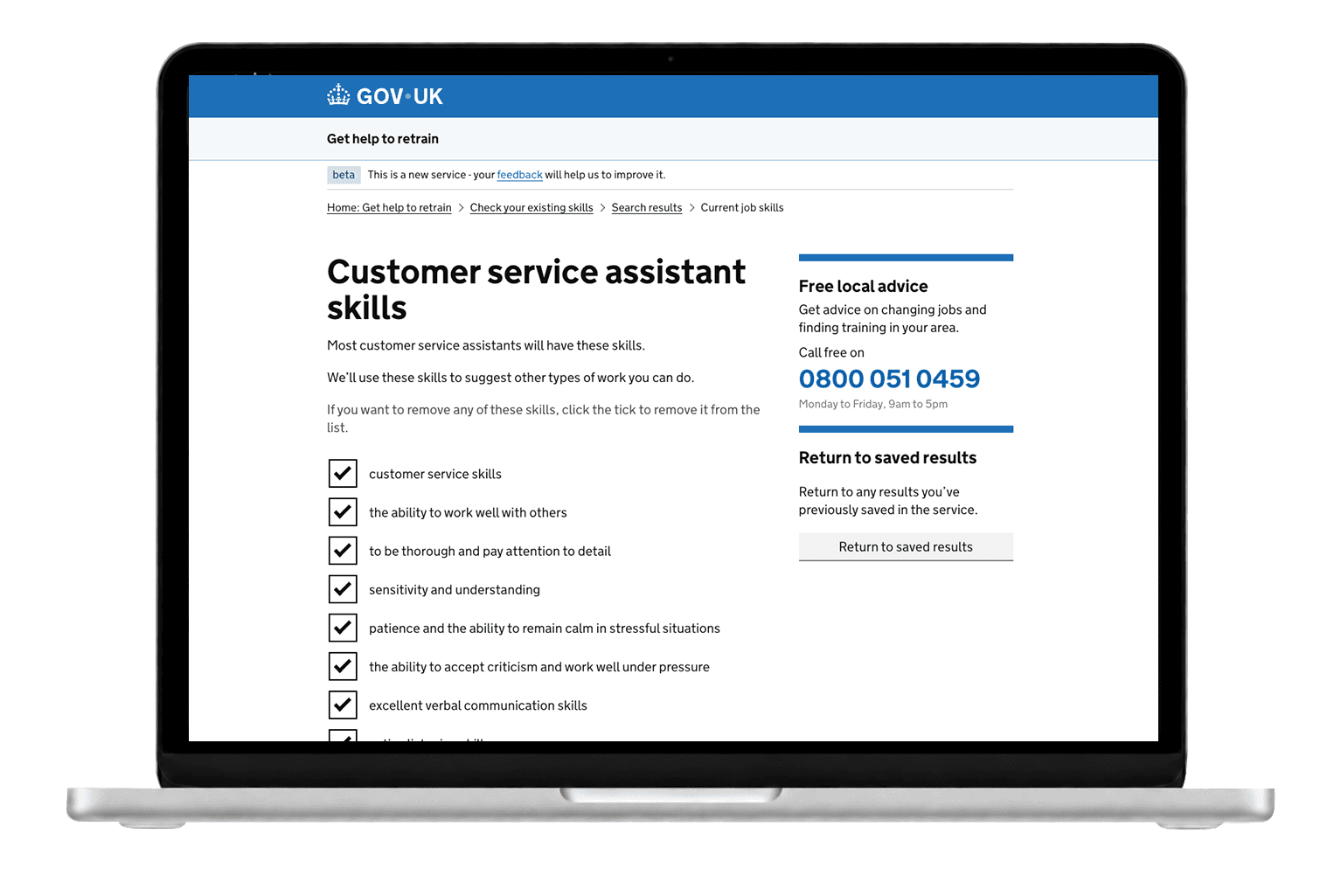
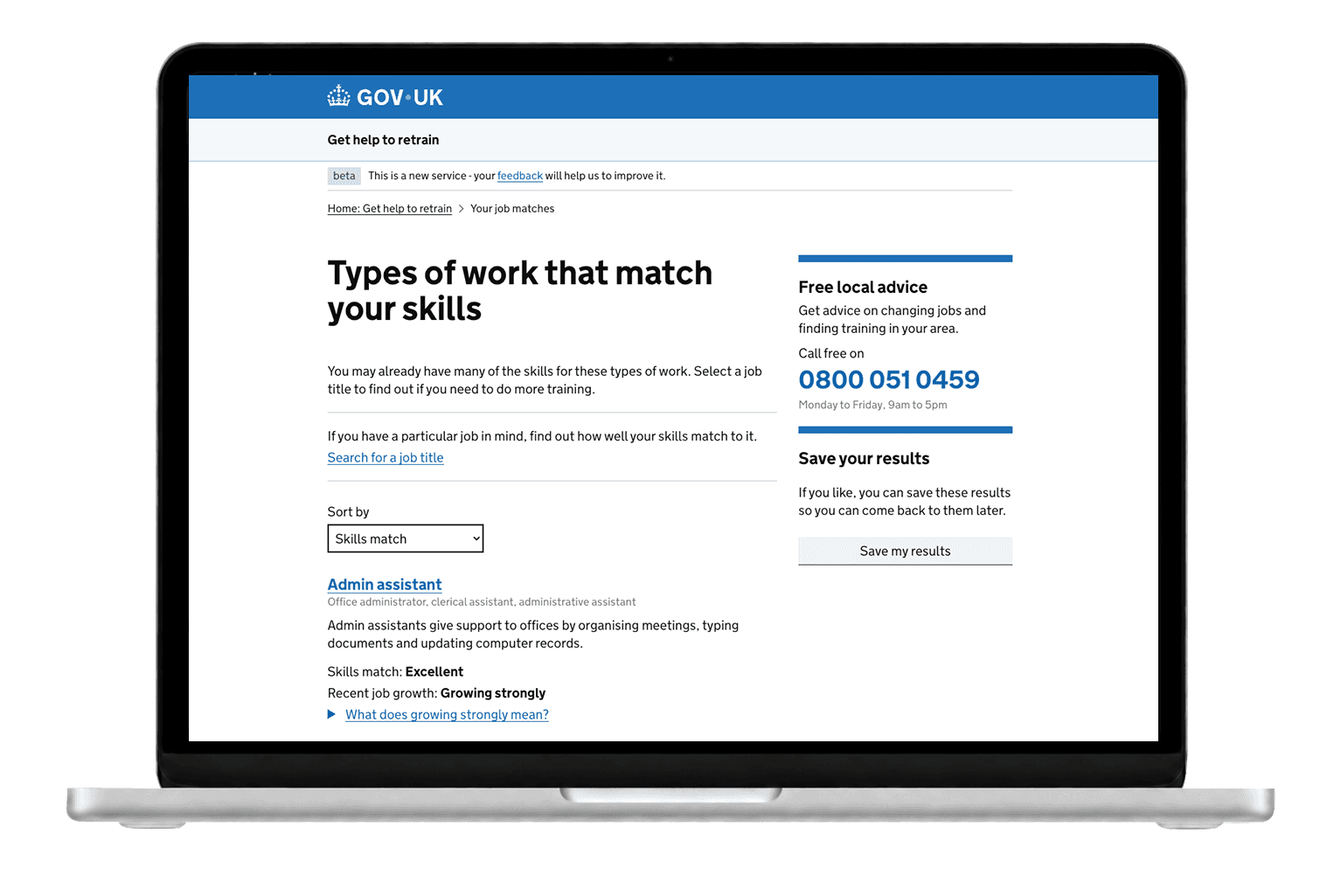
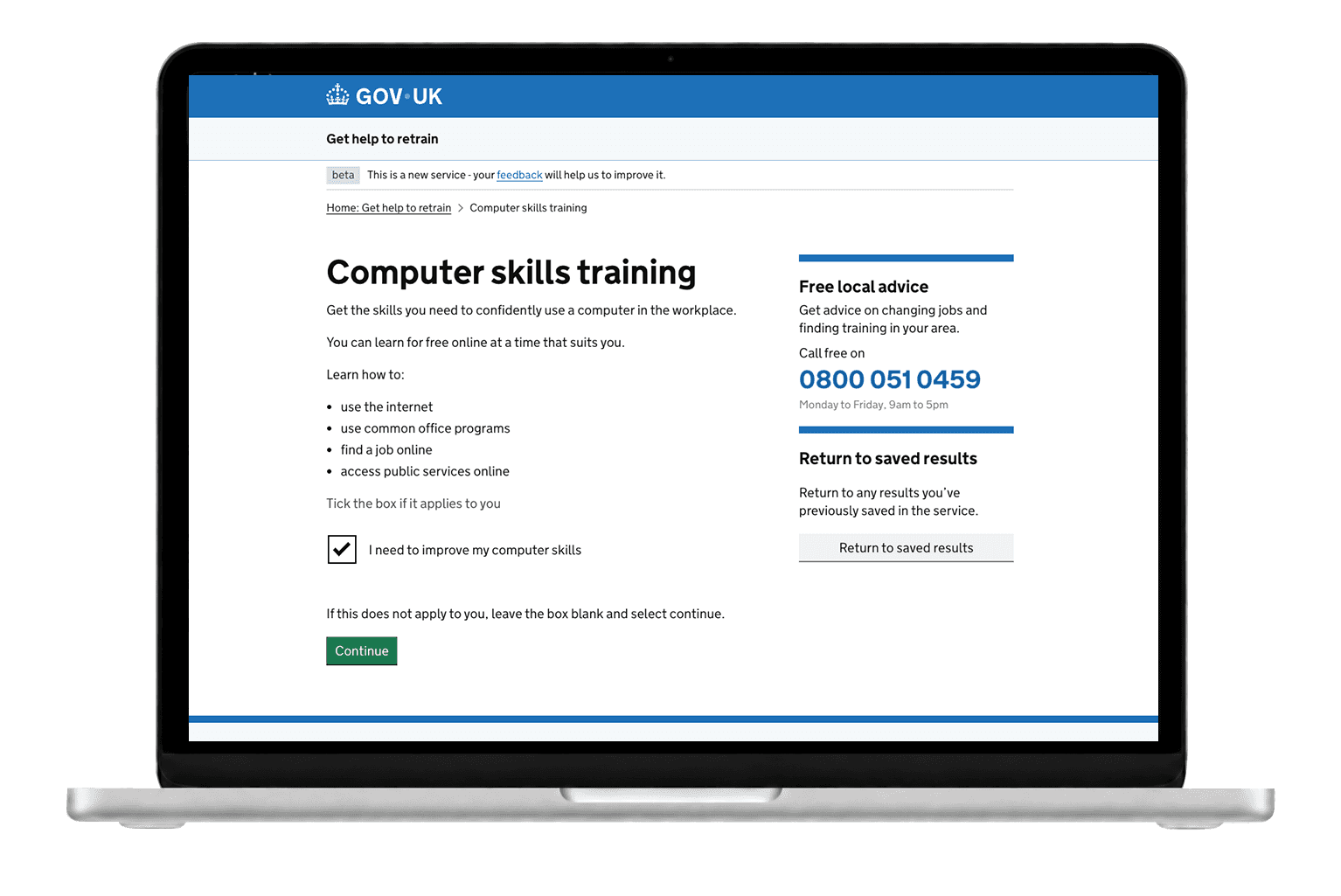
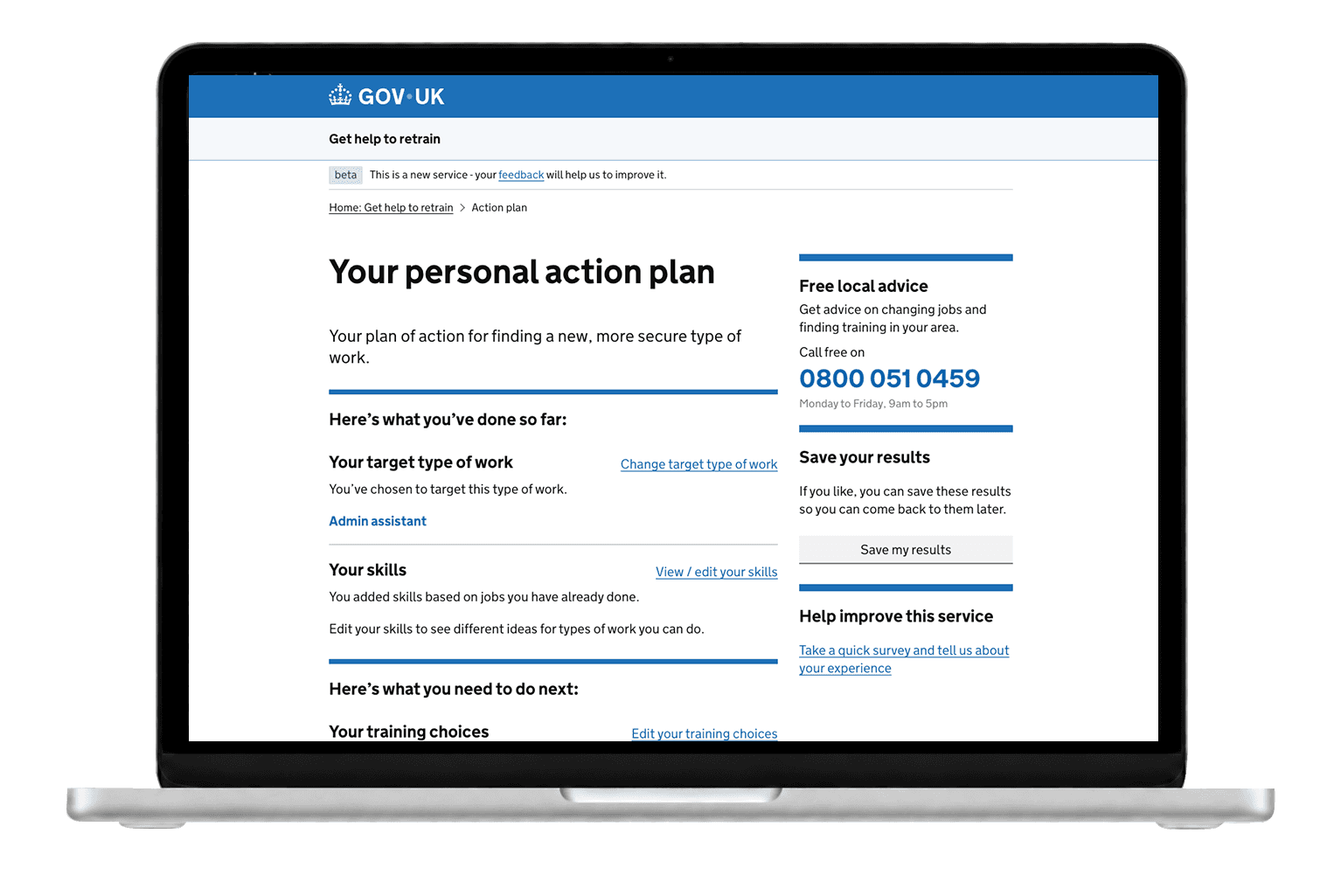
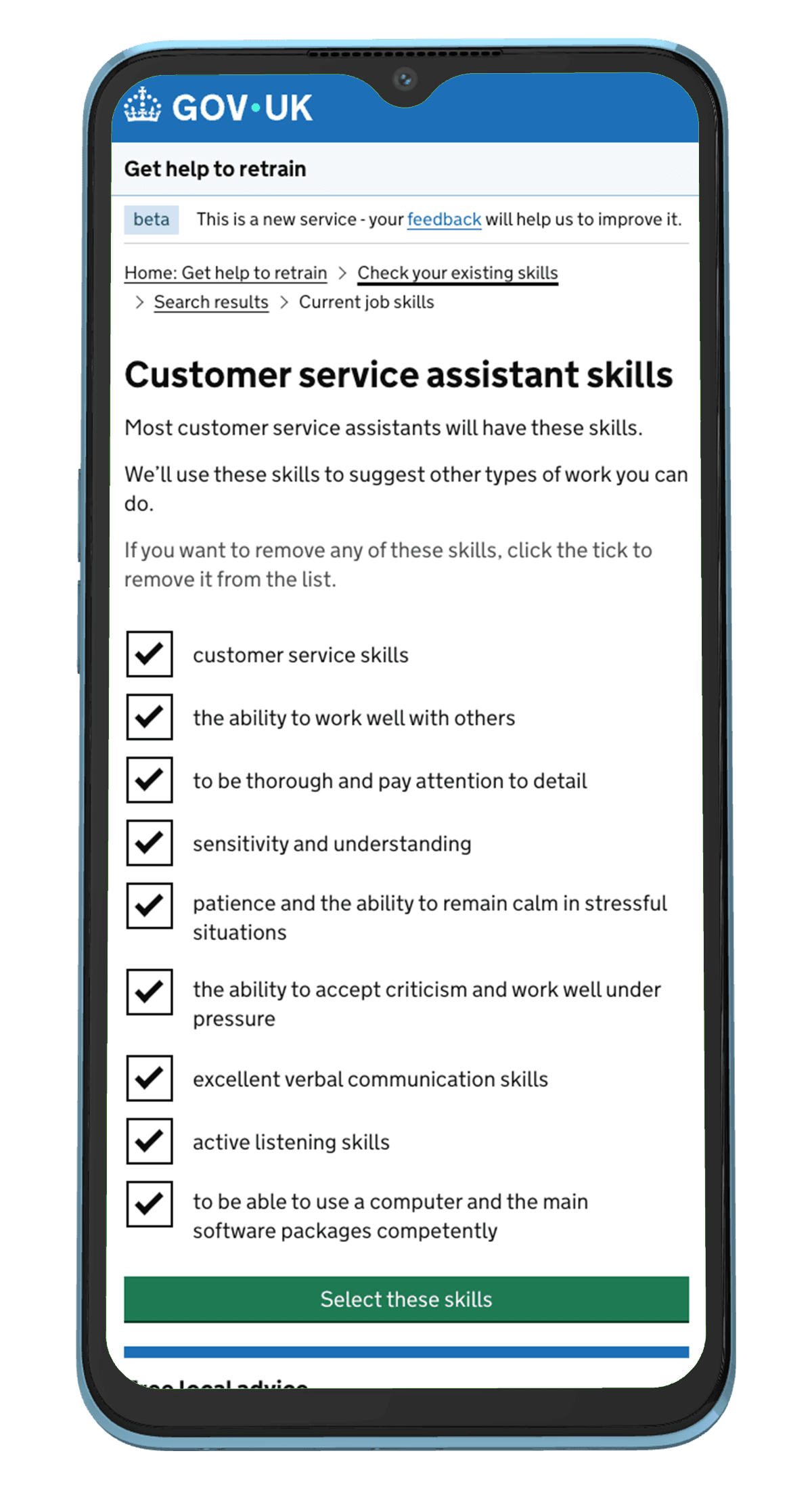
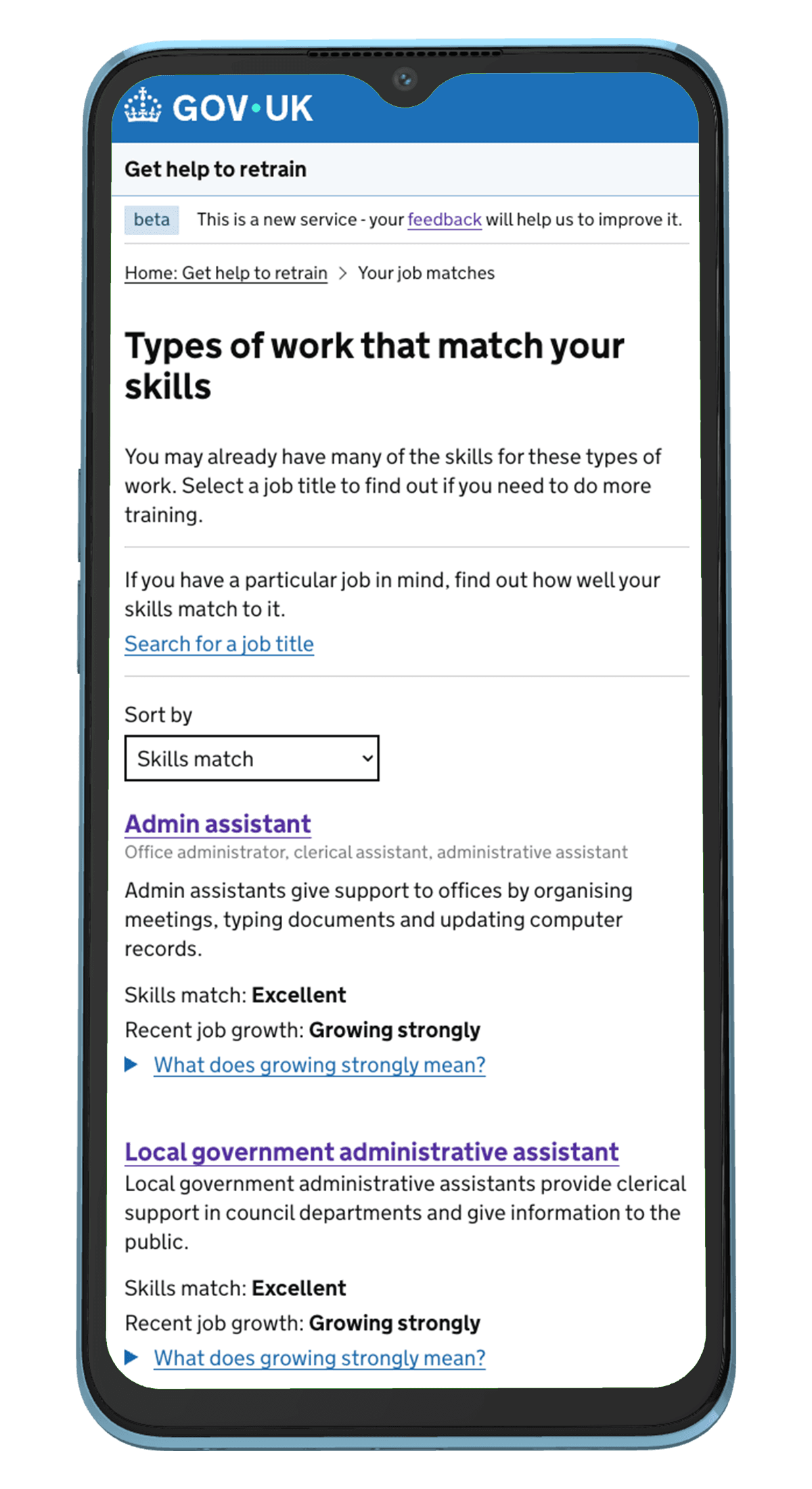
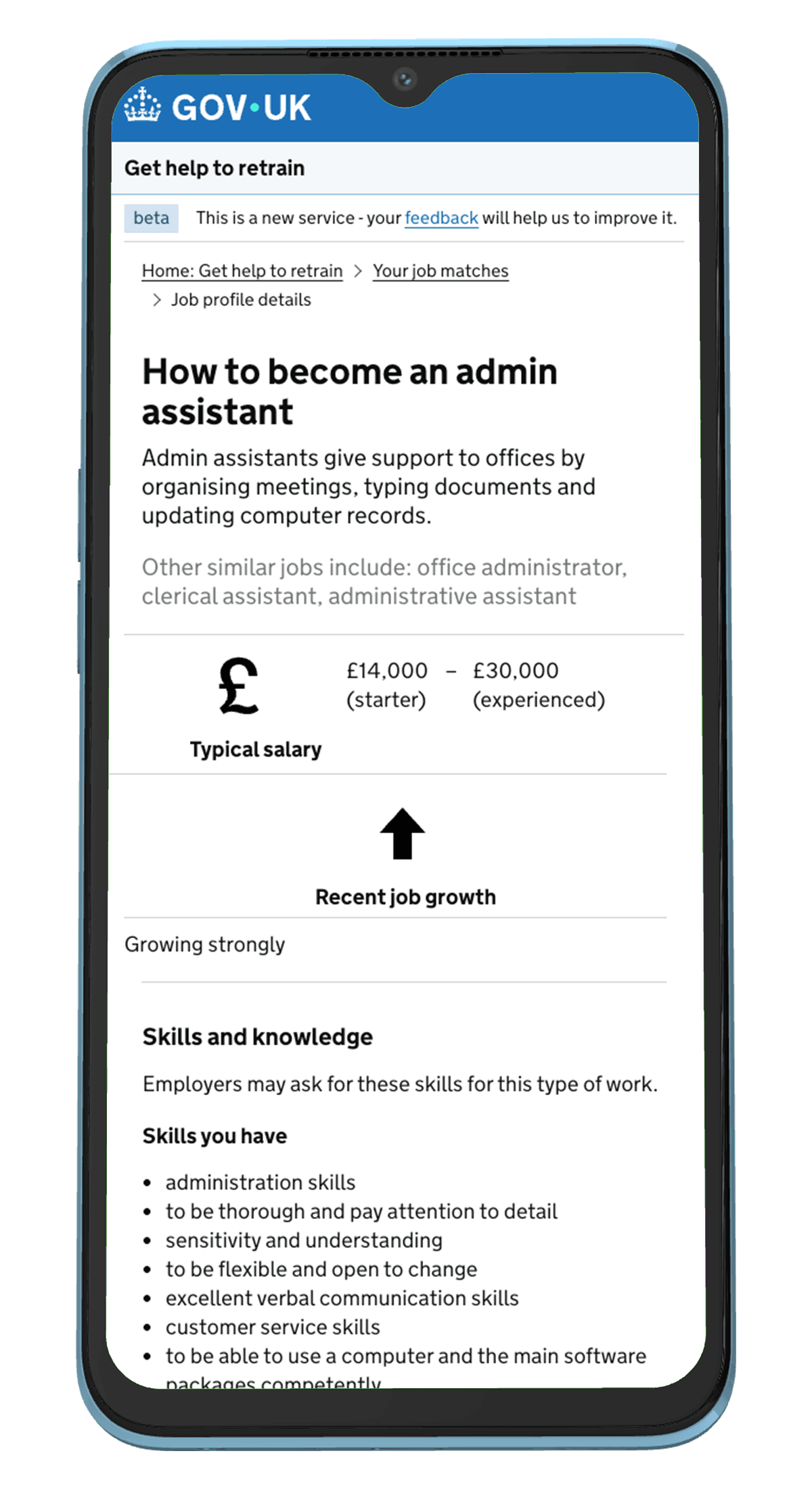
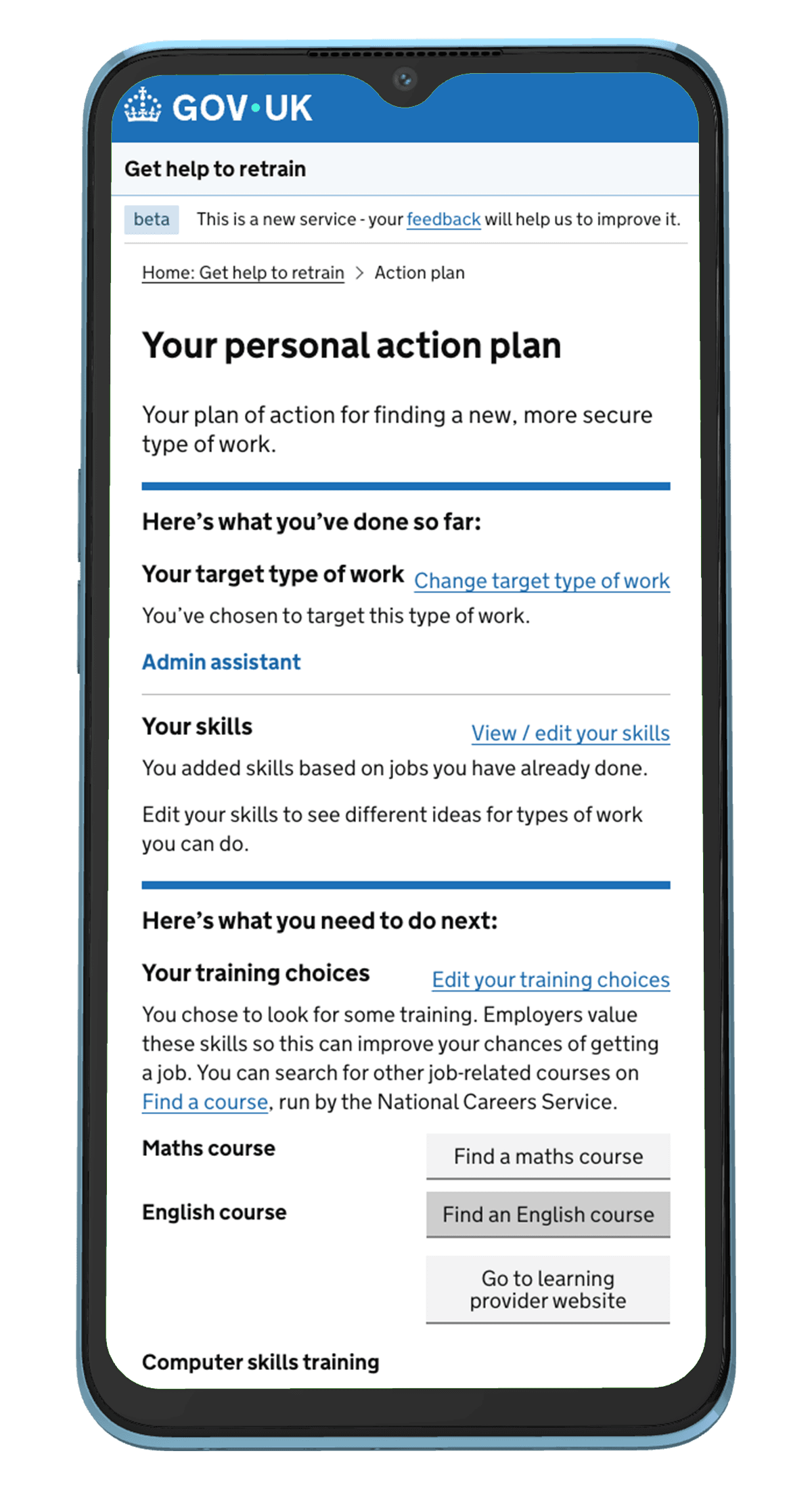
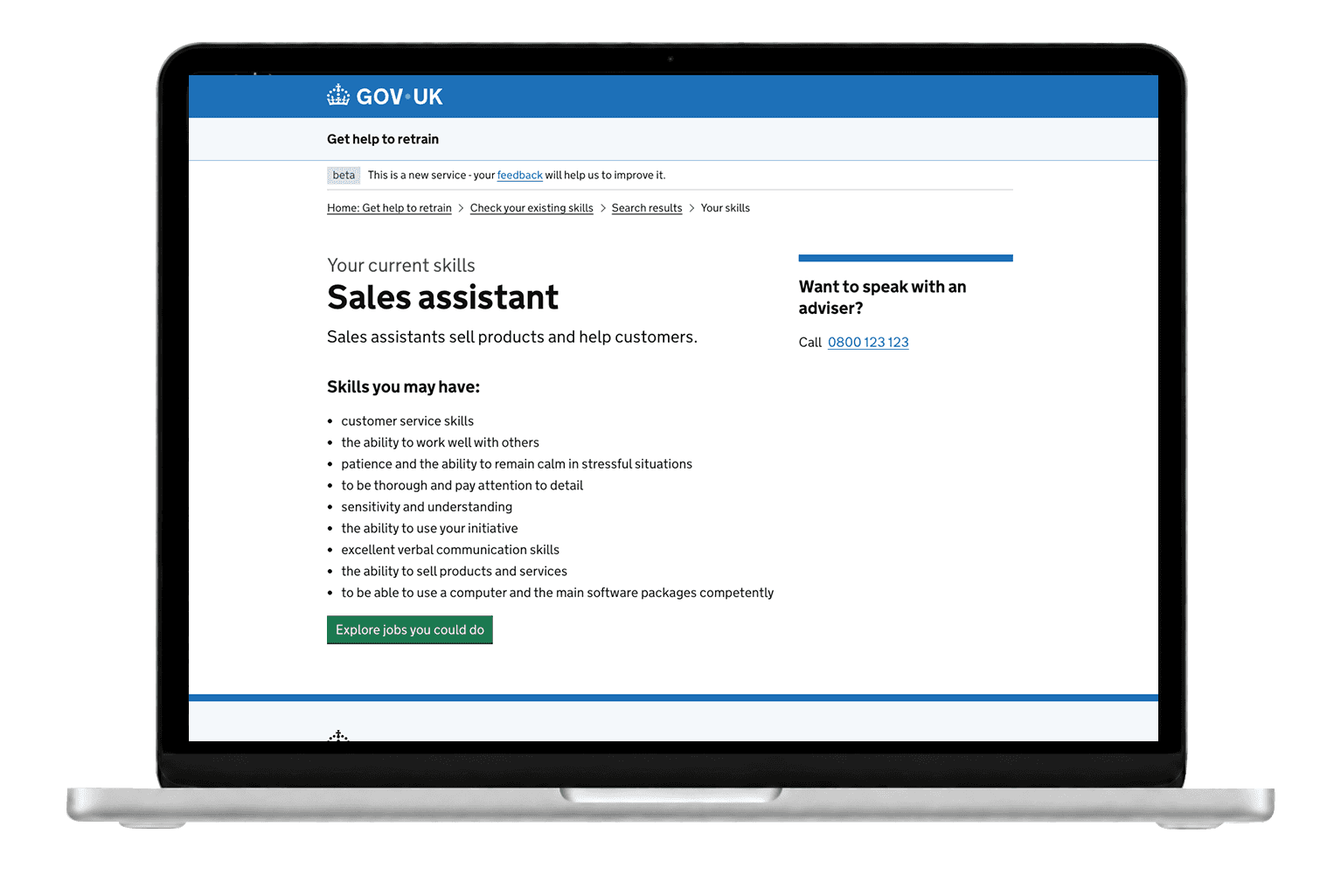
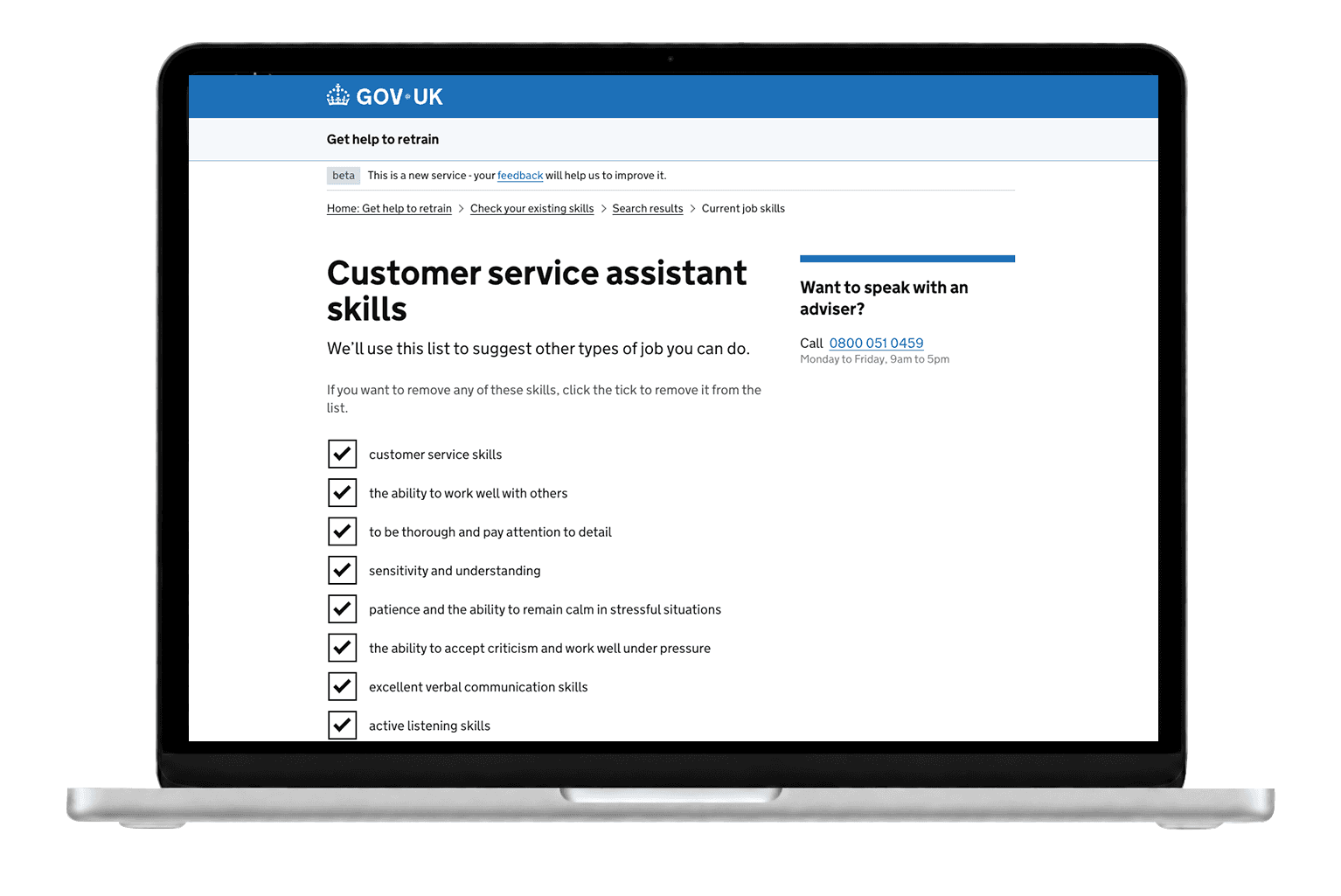
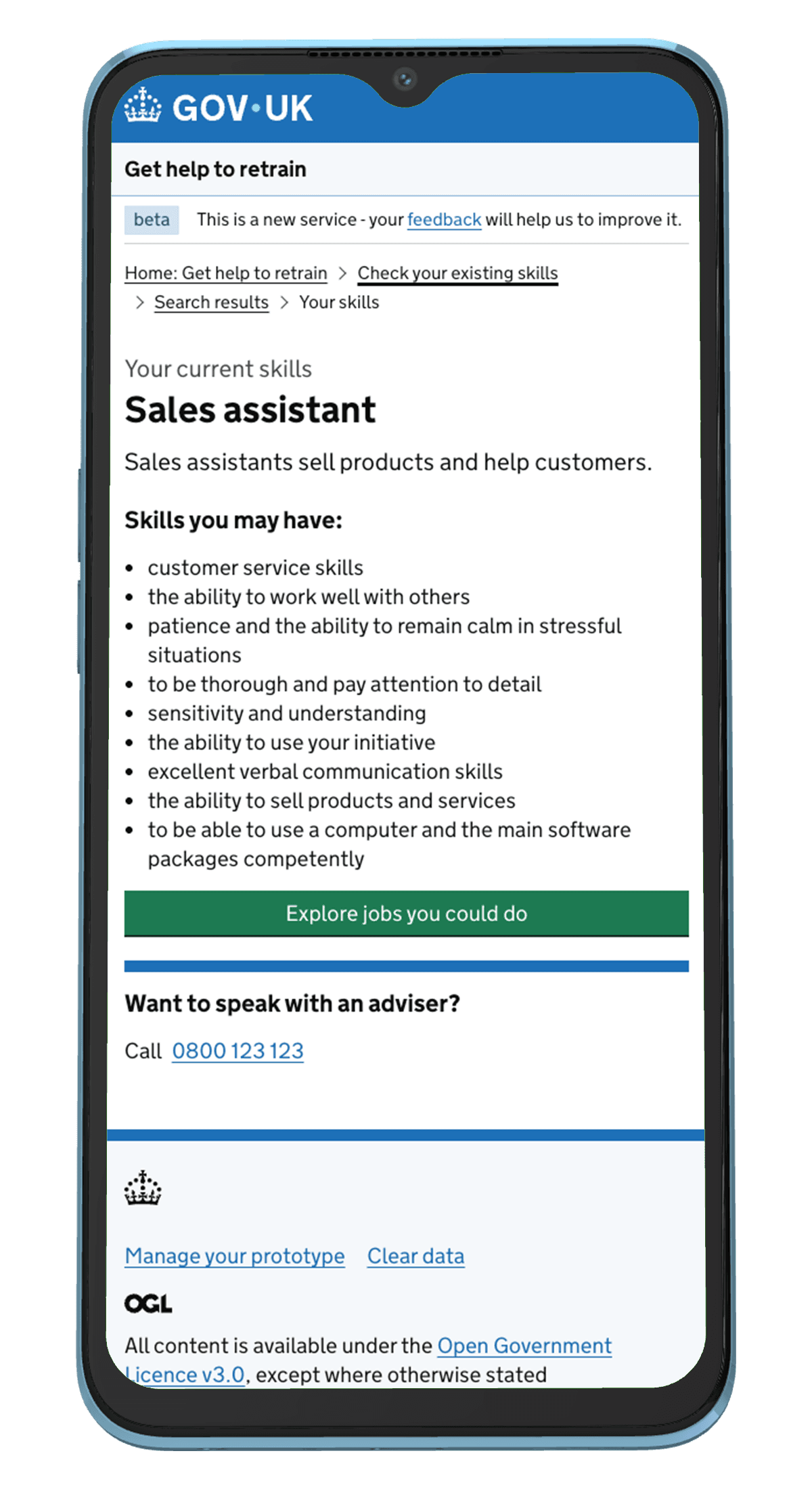
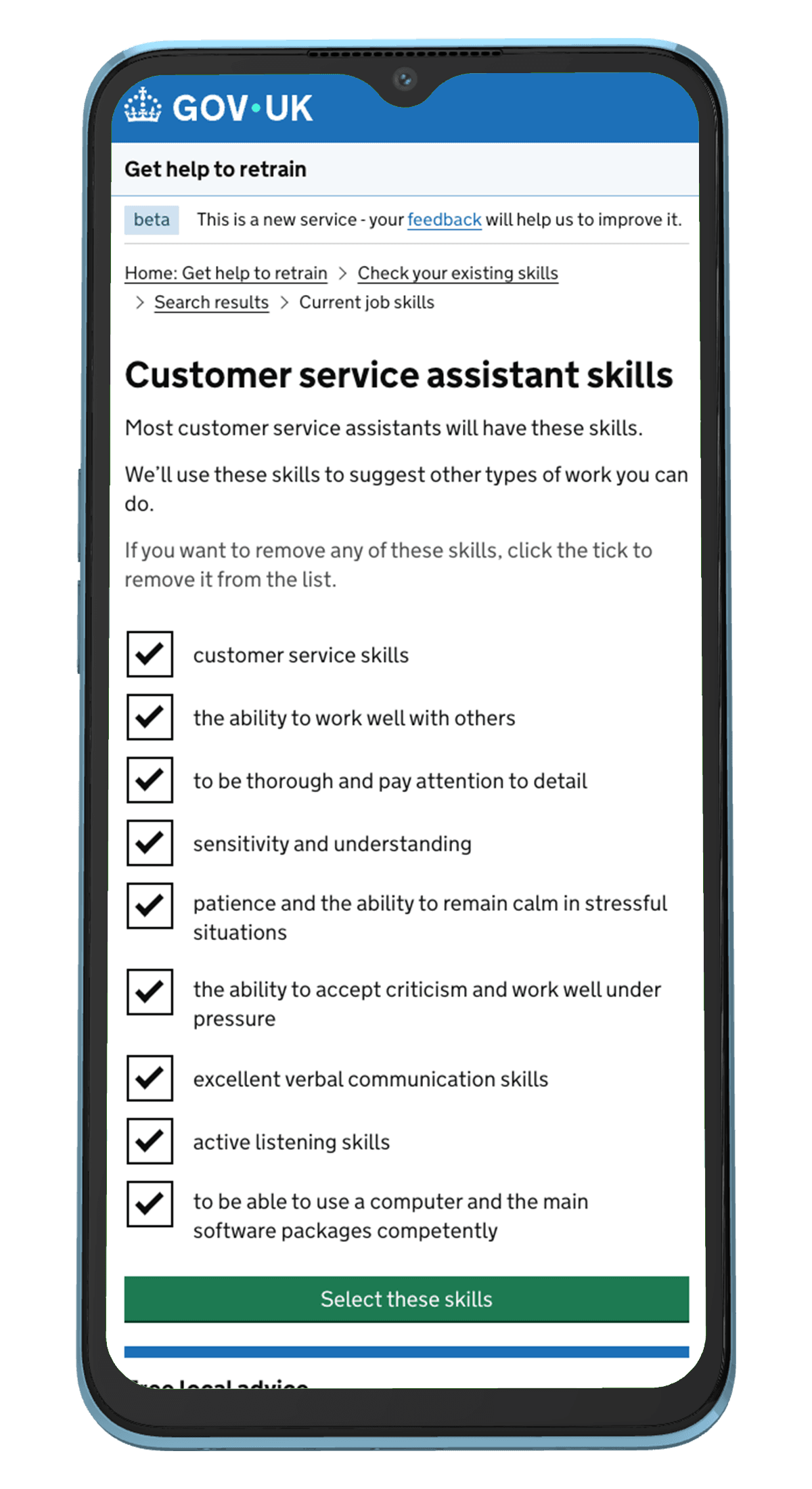
Prototype testing and iteration improved each major part of the service over time. I refined how users found their current role, how they selected transferable skills, how they explored related roles, and how they built a personalised action plan. Different patterns were tested to find the most intuitive way of helping users make progress without overwhelming them.
The phased rollout was a key part of the approach. It allowed the team to get the service live in a useful form quickly, while also creating clear milestones for how features and complexity would be added over time. Alongside future-state prototypes for testing, I produced phase-specific prototypes that developers could build from directly. That made the work more delivery-ready and gave the team a clearer bridge from design into implementation.
Throughout the project, I also paid close attention to GOV.UK service standards. Because this was a citizen-facing service, the design needed to align closely with GDS expectations, and the research process needed to be rigorous in how it was conducted, recorded and synthesised. That discipline was important in getting the parts of the service I controlled to the right standard for assessment.
WHY IT MATTERED
The service addressed a real need. As automation and longer working lives reshape the labour market, people need clearer ways to understand what skills they already have and how those skills could translate into more secure work.
This mattered especially for users who might otherwise struggle with digital services. In that context, good UX was not just about cleaner screens. It was about reducing friction, making options easier to understand, and helping users leave with a clearer sense of what they could do next.
OUTCOME
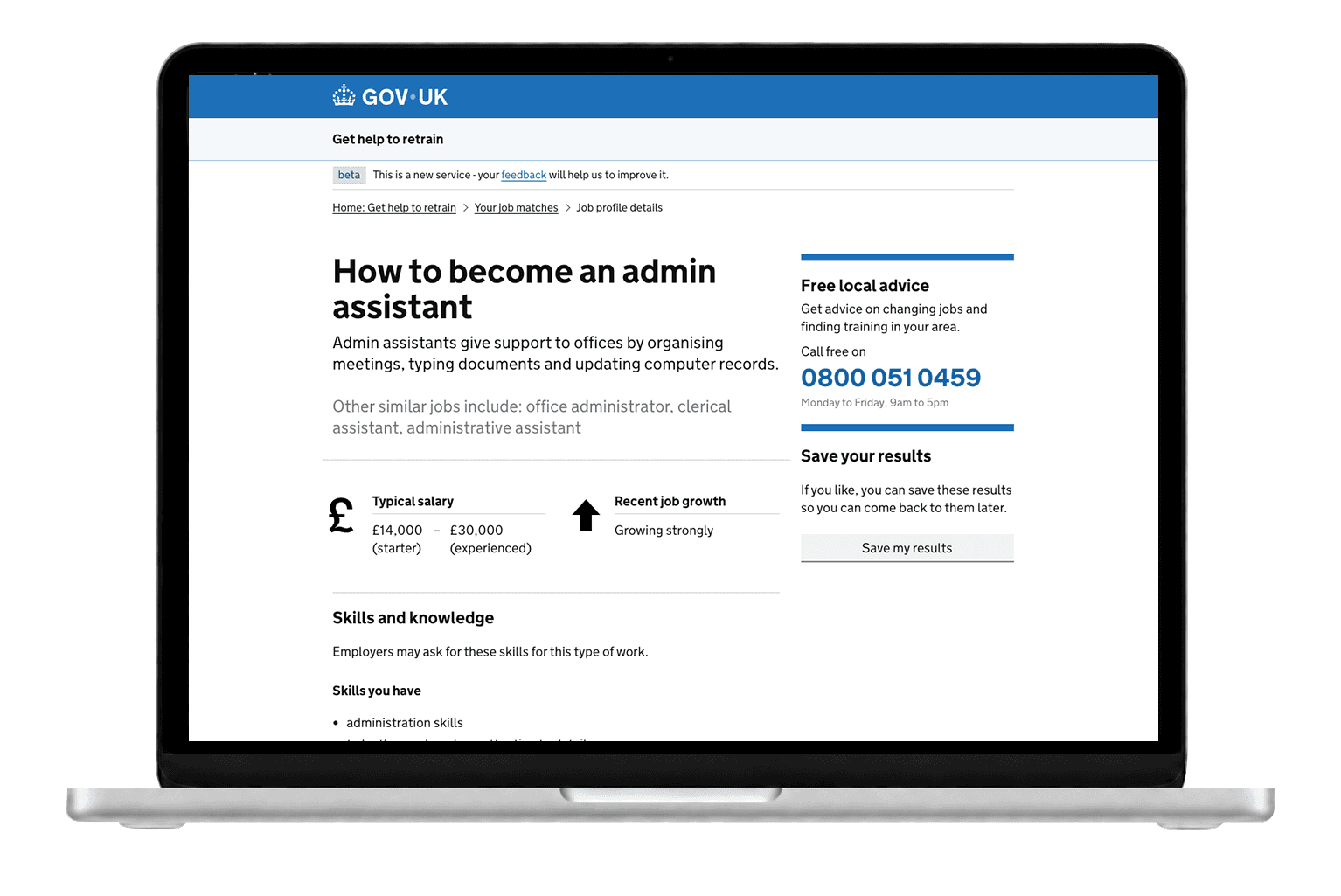
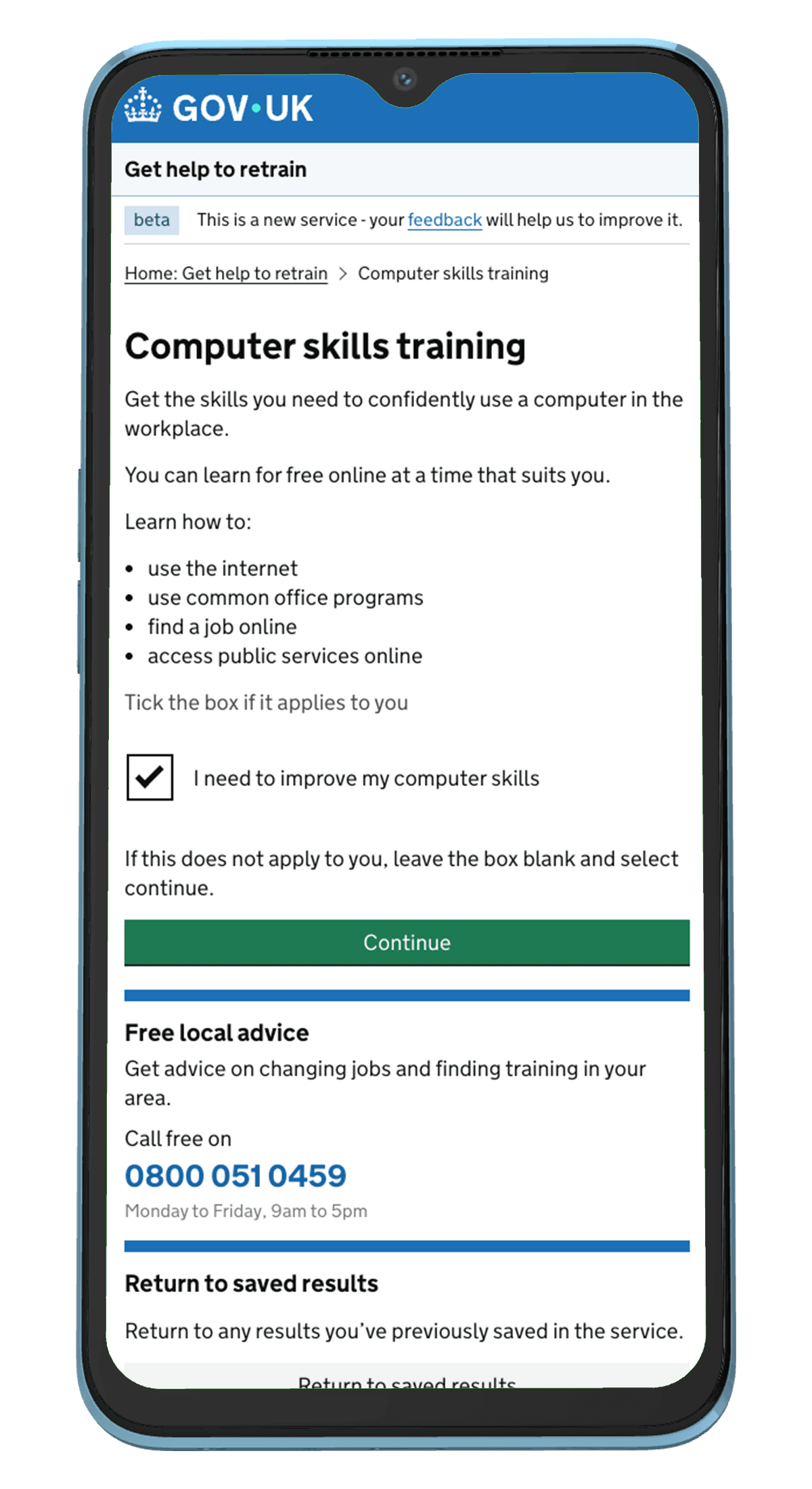
By the end of Alpha, the service enabled users to check their existing skills by finding their current role or something close to it, explore different roles based on transferable skills, view more information about potential new roles, and build a personalised action plan that included relevant training routes. That made the service something people could meaningfully use, not just a concept for later delivery.
Prototype testing and iteration improved each major section of the service over time. I refined how users found roles, selected transferable skills, explored opportunities and built their action plans, helping make the journey more intuitive and more usable for a lower-confidence audience.
The phased rollout was also a key outcome. It allowed the team to launch quickly, introduce complexity in manageable stages, and give developers a clear roadmap for how the service should grow. The prototypes and supporting code helped communicate not just visuals, but also logic, styles and component behaviour. For stakeholders, the service map became a focal point that made the rollout easier to understand and discuss.
The service did not ultimately pass assessment because of issues with the wider rationale for standing it up, particularly given overlap with the National Careers Service. But the parts of the service I controlled were shaped closely around GOV.UK service standards, and those elements met the required standard. That makes this project an honest example of designing well within constraints, even where the broader strategic context was imperfect.
WHAT THIS SHOWS
Turning a complex policy challenge into a usable citizen-facing service
Designing clearly and effectively under tight Alpha timelines
Building complex prototypes using the GDS prototyping toolkit
Using prototyping and iteration to improve complex journeys over time
Structuring information and interactions for a lower digital literacy audience
Designing phased delivery in a way that supports both users and developers
Translating prototypes into build-ready specifications through code, logic and component thinking
Aligning a service closely to GOV.UK service standards in preparation for GDS assessment
Creating clarity for stakeholders through service maps, rollout planning and shared delivery milestones