HMCTS SSCS Evidence Sharing Service
ROLE: Senior UX Designer
Consultancy: Transform
DATE: November 2016 – September 2017
Redesigning a paper-heavy appeals process through rigorous UCD, workflow design and realistic prototyping
SUMMARY
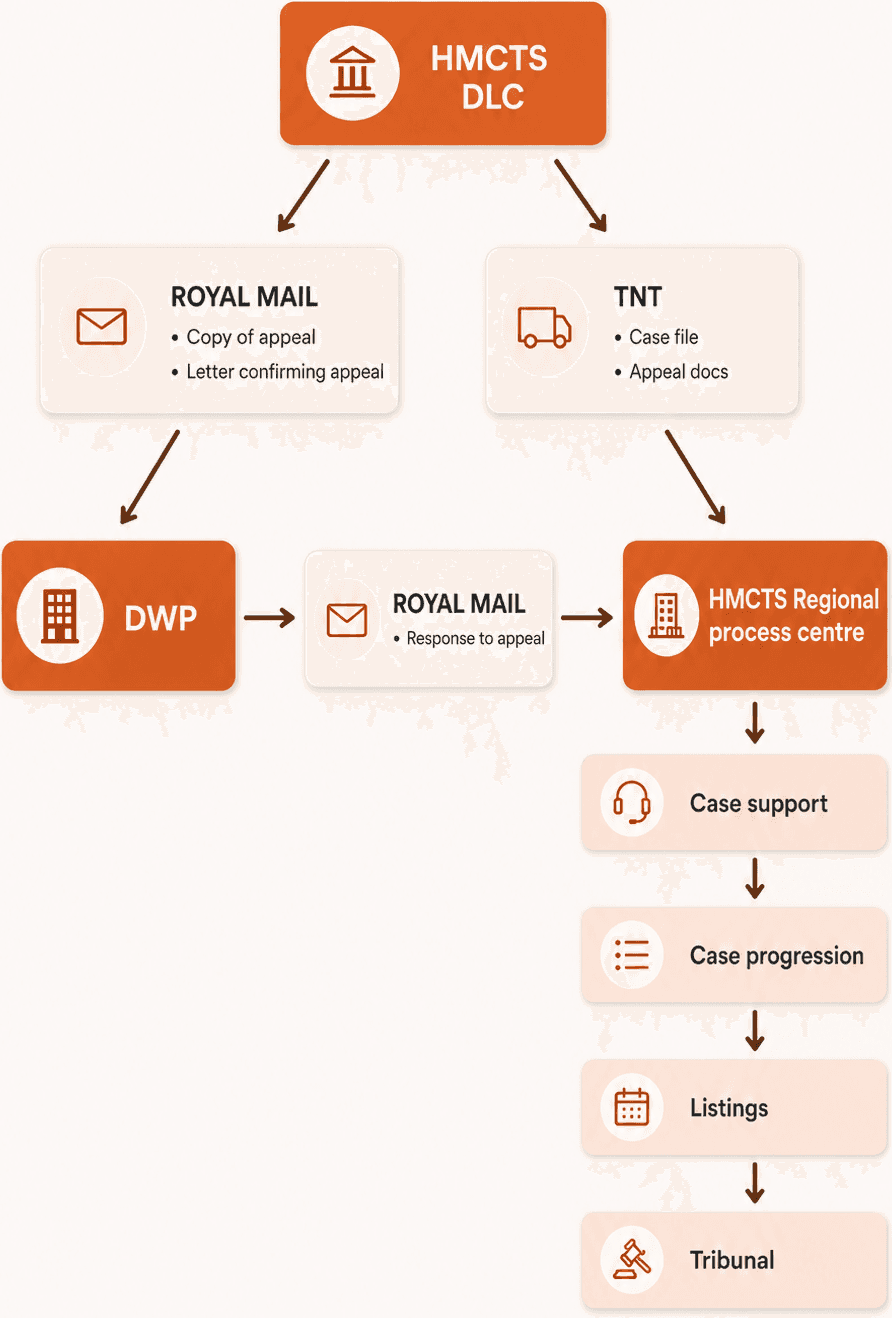
I worked as the Senior UX Designer on HMCTS’ SSCS Evidence Sharing Service, part of the wider Courts Reform Programme. The aim was to digitise a slow, paper-heavy appeals process between HMCTS and DWP, reducing delay, admin overhead and physical document handling in Social Security and Child Support appeals.
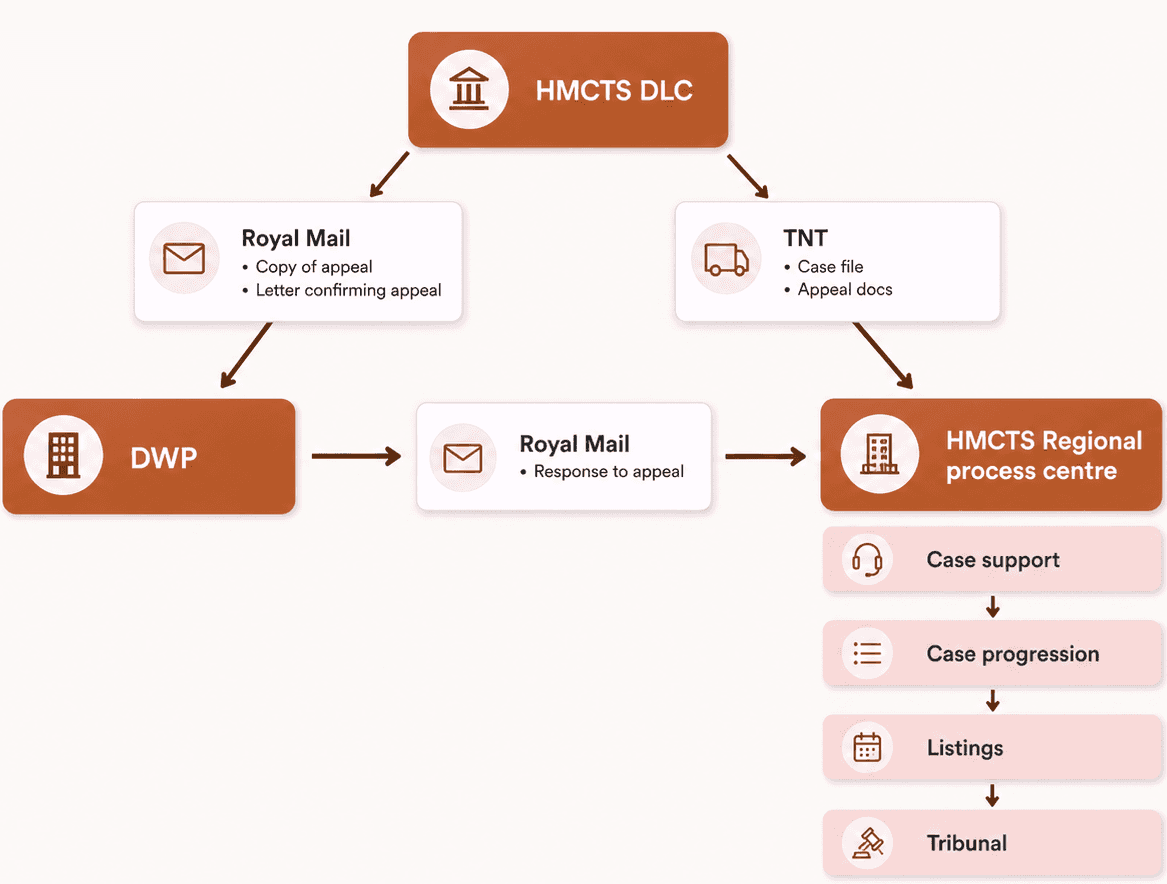
This was a high-value service problem. The existing process handled around 250,000 appeals a year, involved large paper case files, and could take around 24 weeks to reach a decision. The proposed service also had a strong commercial case, with significant potential savings in printing, admin and courier costs.
THE CHALLENGE
The service needed to do more than digitise paperwork. It had to support complex operational workflows across HMCTS and DWP, help staff identify what needed action next, and reduce friction in how evidence and responses moved through the appeals process.
A further challenge was that GOV.UK patterns were a useful starting point, but this was not a typical citizen-facing service. It was an internal case management system, so standard GDS patterns had to be adapted carefully for workflow-heavy admin use.
WHAT I DID
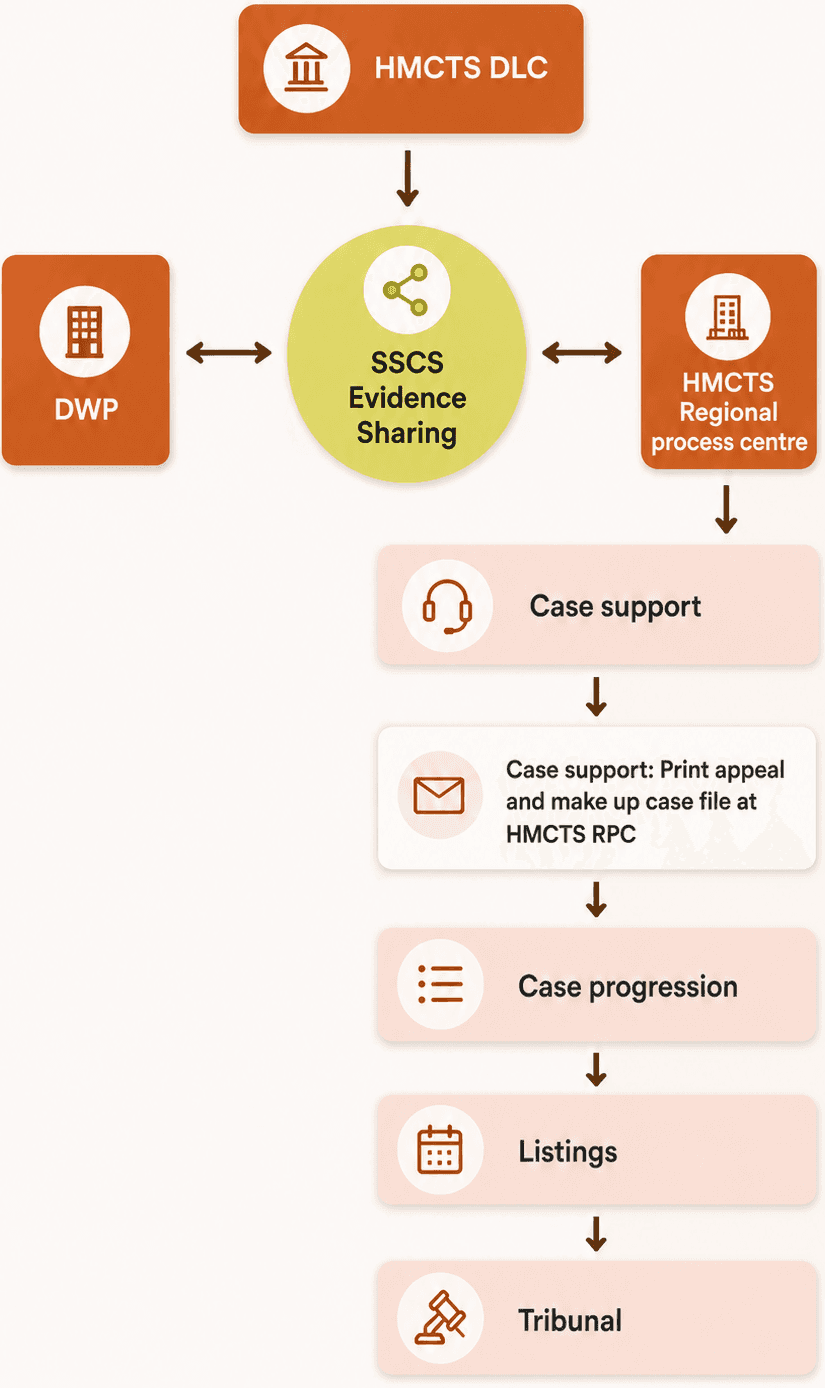
I worked closely with a user researcher across discovery, service mapping, interaction design, prototyping and testing. We carried out site visits, shadowed staff, mapped the existing process, and defined role-based needs across HMCTS and DWP.
Research was built into every sprint. Findings were reviewed with the Product Owner, prioritised using MoSCoW, then fed back into the prototype for the next round of testing.
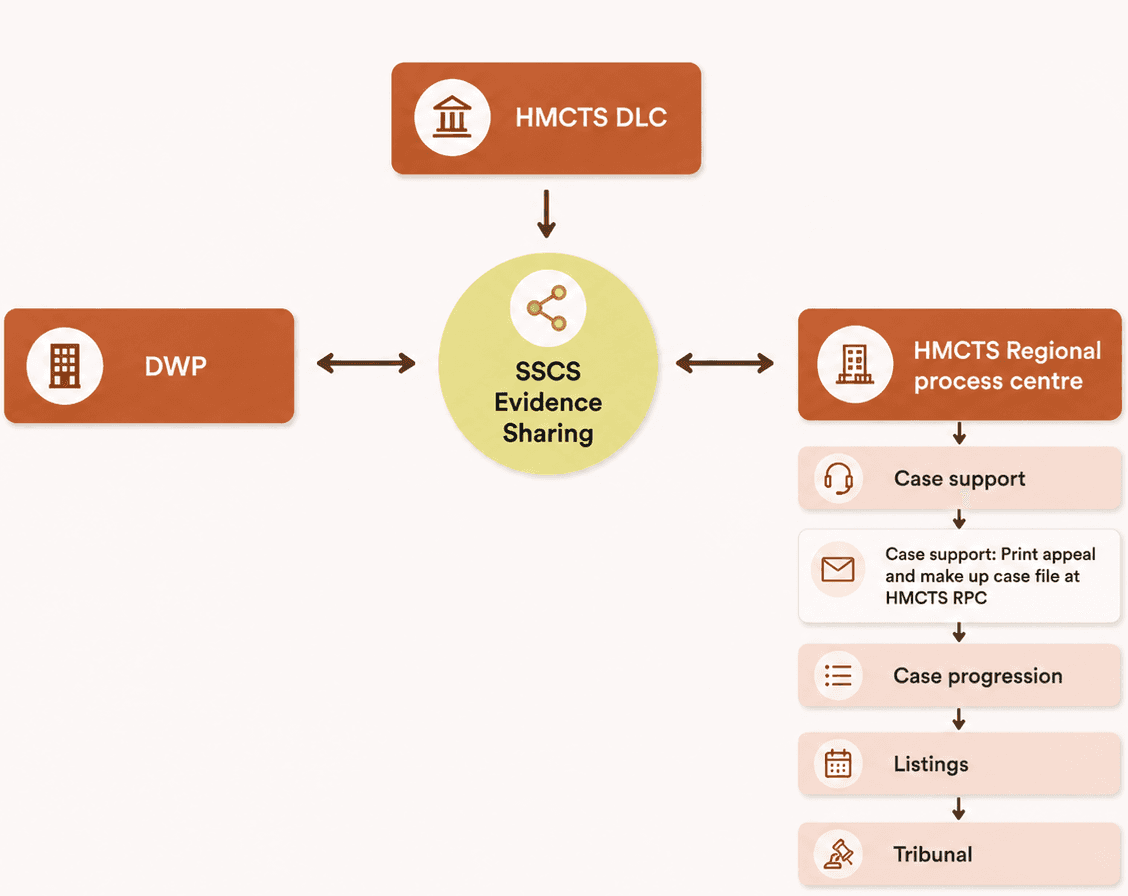
I designed the service around the real workflow, then focused on three key interaction challenges:
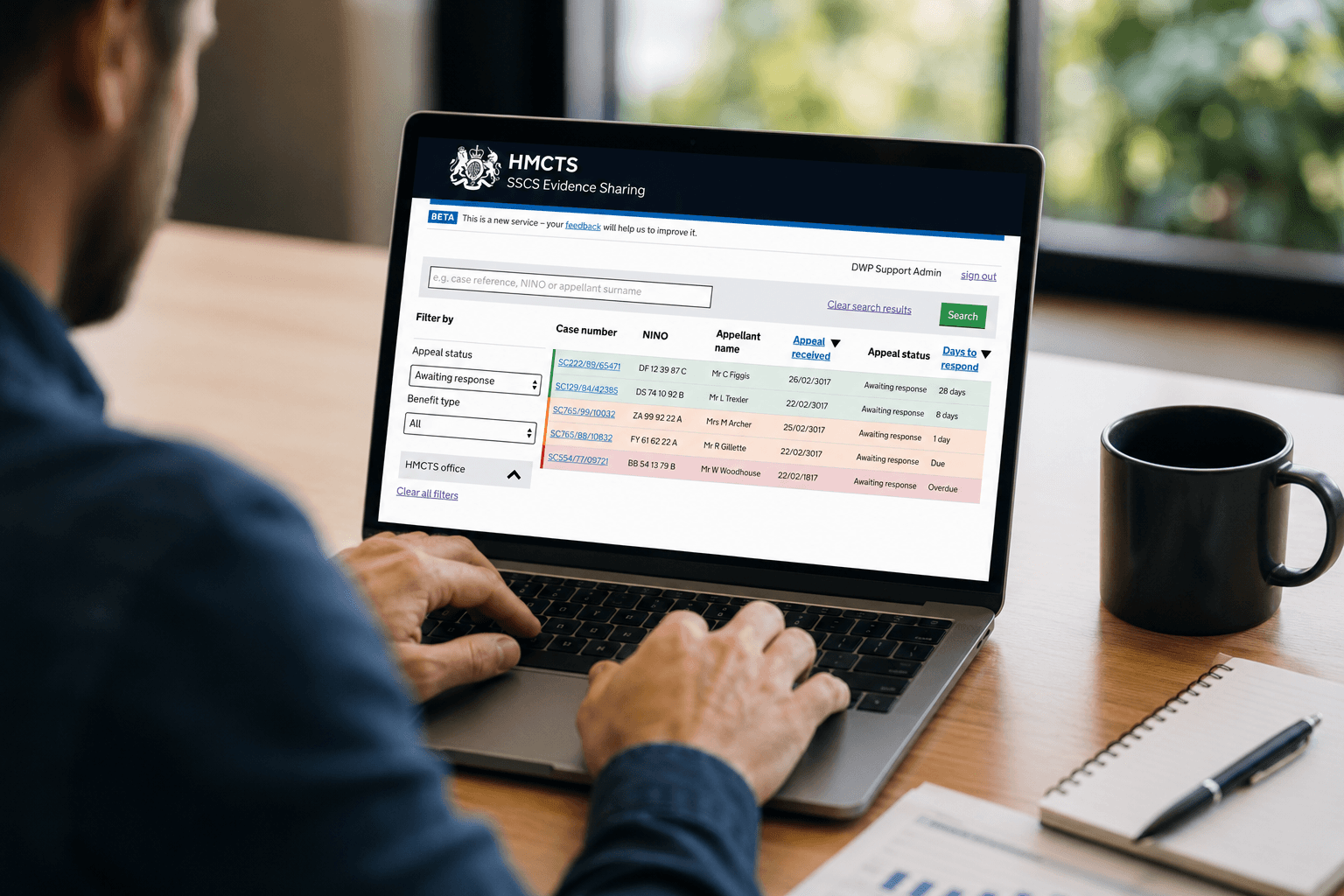
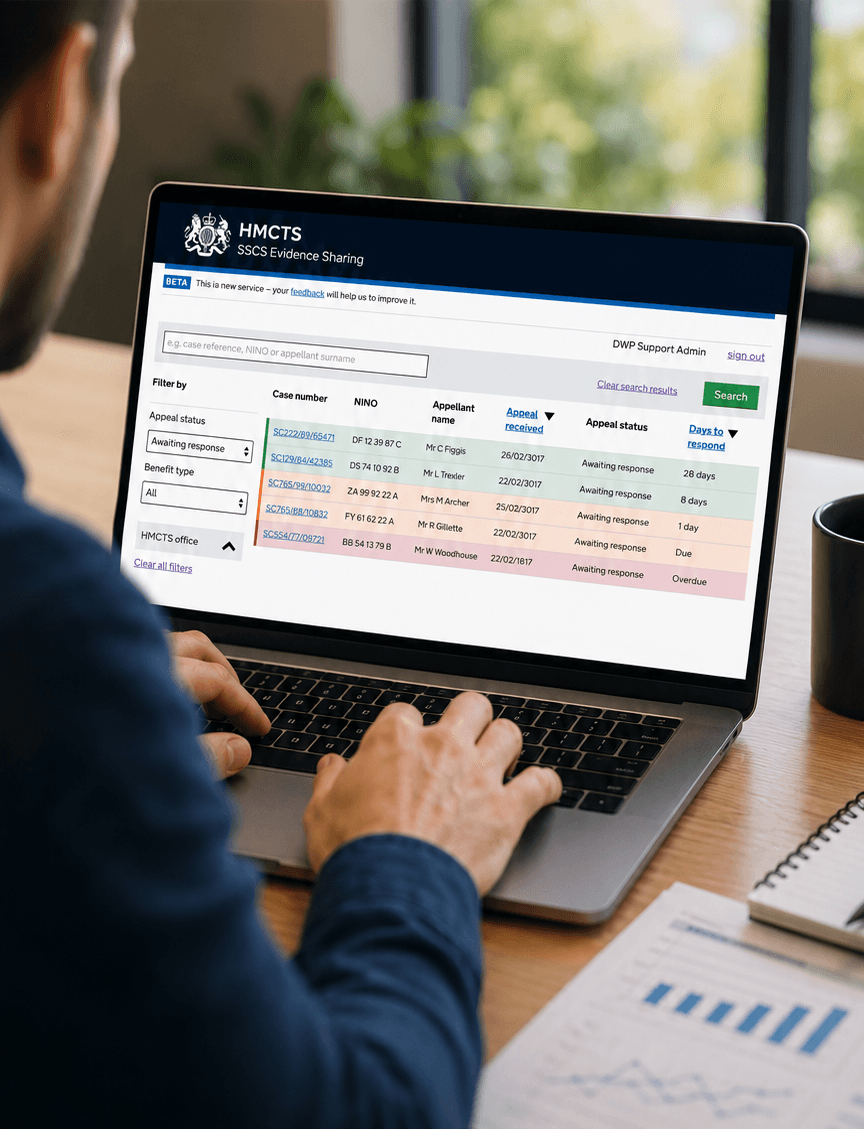
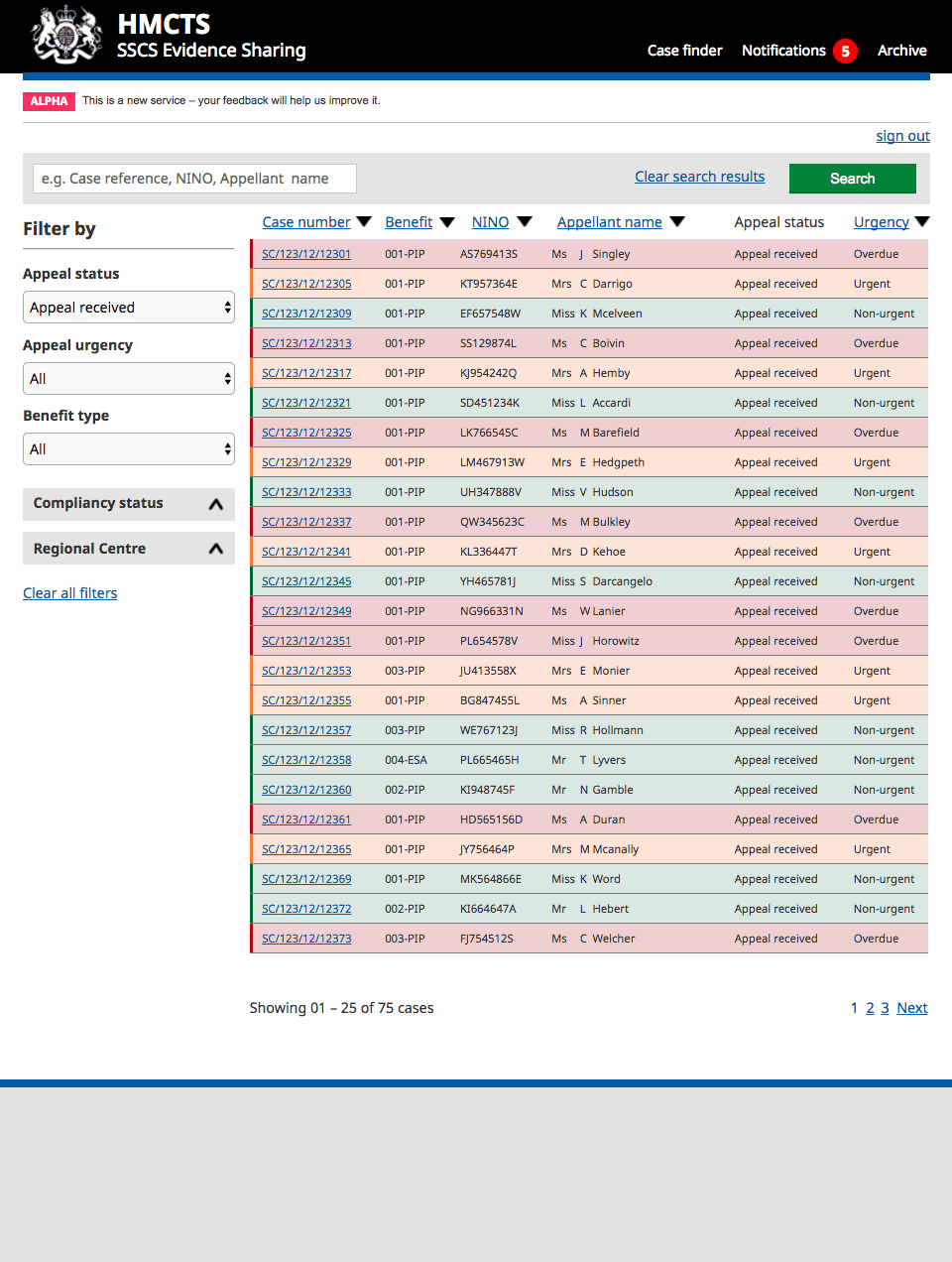
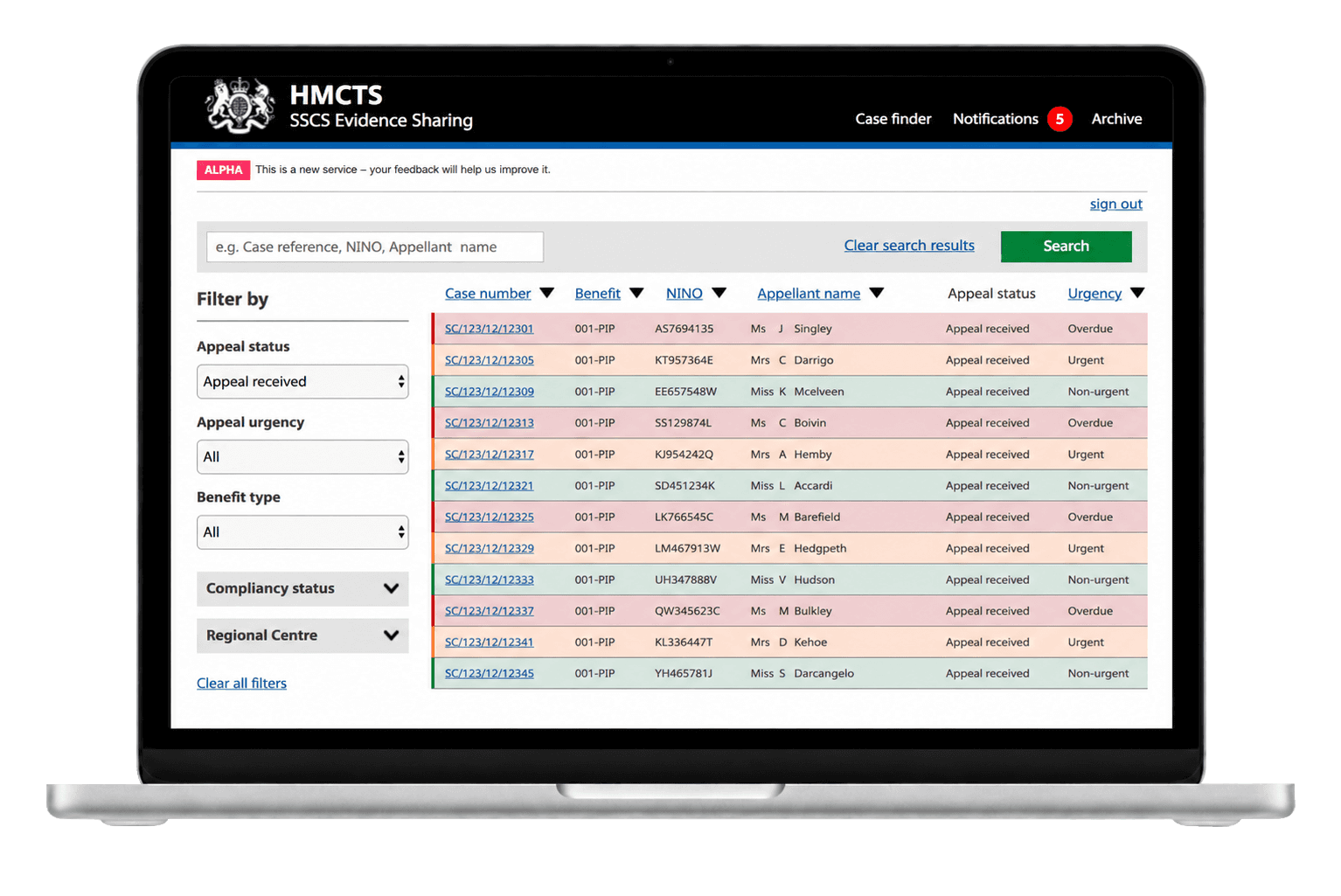
Prioritisation: I designed a work queue with sorting, filtering and RAG status so users could quickly identify which cases needed action under SLA pressure.
Shared terminology: HMCTS and DWP often used different terms for the same things, so labels and patterns had to be tested and refined until both sides understood them.
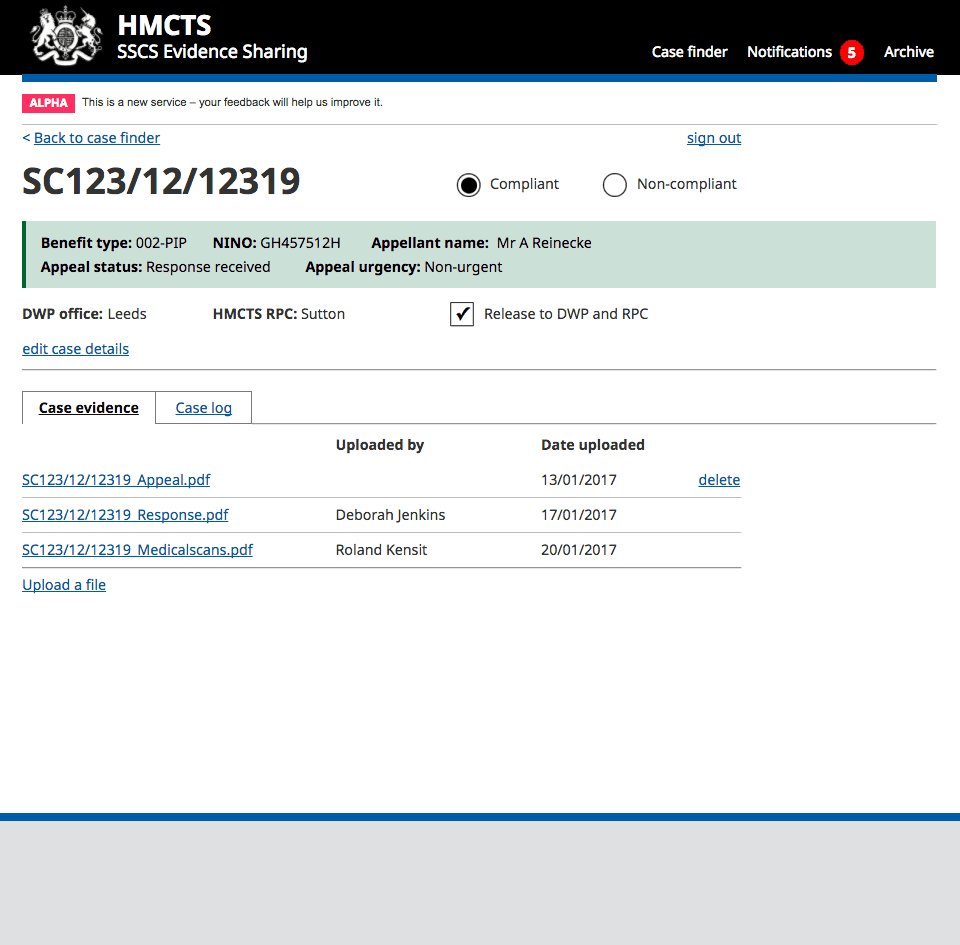
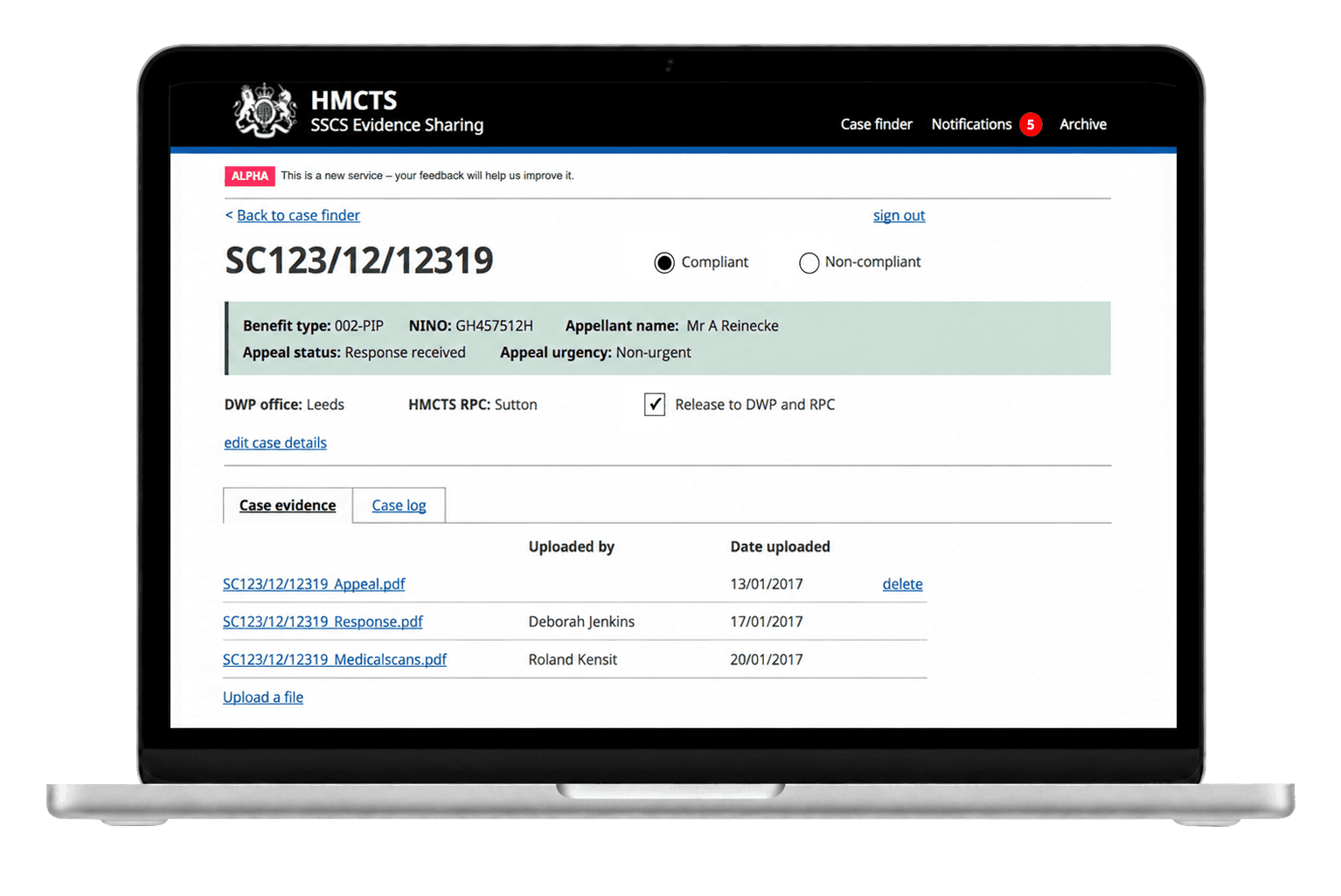
Case-level communication: I designed messaging within case detail so departments could communicate in context, something the paper-based process handled poorly.
I also built a highly realistic Axure prototype with working filters, search, status logic and case progression. That made the service feel much closer to a functioning system, which led to better quality feedback in testing.
WHAT I DISCOVERED THROUGH RESEARCH
I worked closely with a user researcher throughout the project and attended research sessions across HMCTS and DWP sites around the country. That meant I was not designing from second-hand insight — I was seeing operational problems first-hand, helping synthesise findings, then translating those findings directly into the service design and prototype.
Some of the most important things I discovered were:
Staff needed stronger workflow support. Users were working against multiple SLAs and needed to quickly identify which cases required action next. This directly shaped the work queue, sorting, filtering and RAG-status patterns.
Terminology was inconsistent across organisations. HMCTS and DWP often used different terms for the same things, so apparently simple labels had to be tested and refined until they made sense across departments.
Cross-team communication was a missing part of the service. The paper-based process did not give teams a good way to communicate in the context of a case, which led to the messaging and flagging features in the prototype.
The new system had to follow the reality of the existing process. Through site visits, shadowing and service mapping, I saw that the design needed to reflect how cases actually moved between teams rather than forcing an unrealistic new model.
Because I was involved in both the research and the design, I could take those findings straight into the workflow, interface and Axure prototype, then use the next round of testing to refine the service further.
THE OUTCOME
Although the service did not progress into private beta because it was blocked by DWP, the work produced a well-tested and credible digital model for evidence sharing.
It demonstrated clear potential to:
reduce paper duplication and physical handling
speed up the movement of evidence between HMCTS and DWP
help staff prioritise work more effectively
reduce admin and courier costs
improve a critical service for vulnerable users waiting on appeal outcomes
Testing feedback was positive: users found the workflow natural, responded well to prioritisation features, and saw case-level messaging as a valuable improvement.
WHAT THIS SHOWS
Strong UCD practice in a true agile delivery loop
Service design thinking grounded in real operational workflows
Confident interaction design for complex internal tools
The ability to adapt GDS patterns for admin and caseworker contexts
Realistic prototyping used to de-risk service decisions and improve research quality